

.webp)
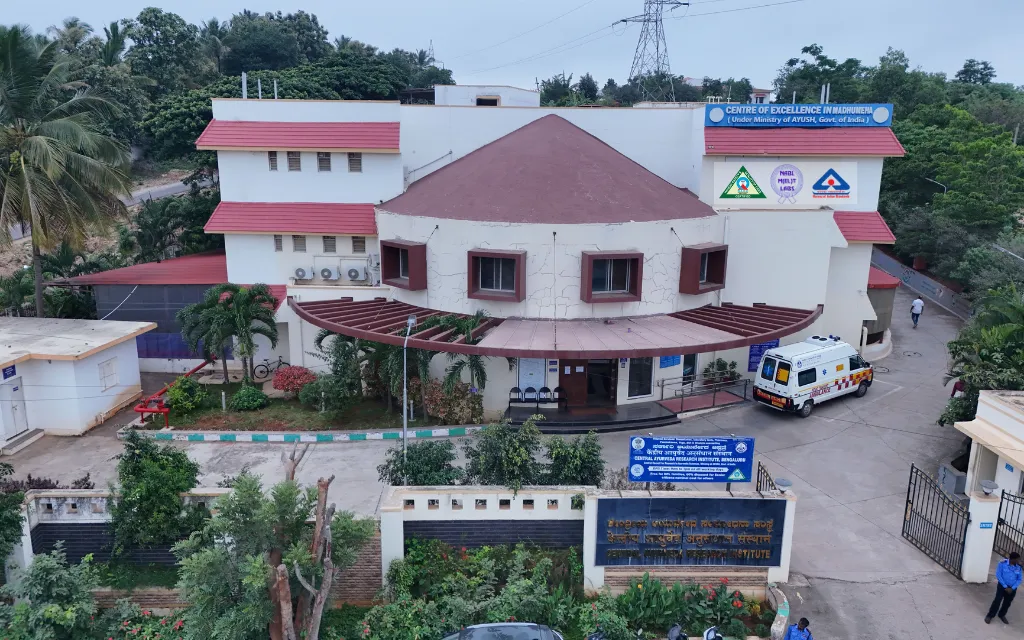
Delhi, April 11: In a significant milestone for quality-assured healthcare under the Ministry of Ayush, the Clinical Laboratory at the Central Ayurveda Research Institute (CARI), Bengaluru, has been awarded ISO 15189:2022 accreditation for both Biochemistry and Haematology—becoming the first institute under the Central Council for Research in Ayurvedic Sciences (CCRAS) to achieve this distinction.
This accreditation assures patients that the laboratory delivers accurate, reliable, and safe diagnostic results in line with globally accepted quality standards. The achievement marks the laboratory’s transformation from an entry-level NABL-certified facility to a fully established, accredited centre of excellence.
Union MoS Ayush Prataprao Jadhav highlighted “Accreditation to international standards such as ISO 15189:2022 ensures that patients receive reliable and precise diagnostic services, which are essential for effective treatment and improved health outcomes. This achievement by CARI Bengaluru showcases how the Ministry is steadily transforming Ayush infrastructure into a benchmark of quality and reliability.”
Vaidya Rajesh Kotecha, Secretary, Ministry of Ayush, added: “The recognition of CARI Bengaluru as the first CCRAS institute with ISO 15189:2022 accreditation in both Biochemistry and Haematology is a landmark step in integrating high-quality diagnostics with traditional systems of medicine. It reinforces our focus on evidence-based practice, research, and patient-centric care.”
Prof. Rabinarayan Acharya, Director General, CCRAS stated, “The recent NABL accreditation of CARI Bengaluru, building on its earlier NABH and NABL entry-level certifications and ongoing BIS IS/ISO 9001:2015 progression, along with its role as an Ayurveda Science Incubation Centre under the Ministry of Ayush, significantly elevates quality standards, positioning Ayurveda research and innovation at the highest level of scientific rigor and excellence.”
Dr. Sulochana Bhat, Head, CARI, Bengaluru Emphasised “Achieving ISO 15189:2022 accreditation is a proud milestone for our institute. It reflects our commitment to delivering high-quality, reliable, and patient-centred diagnostic services. This accomplishment not only strengthens our clinical capabilities but also reinforces our role as a leading institution under CCRAS. This could be achieved due to the sincere efforts of Dr. Vidyashree Anchan (Research Officer, Pathology) and CARI team.”
The laboratory currently holds NABL accreditation for 50 test parameters across Biochemistry and Haematology. It offers a comprehensive range of diagnostic services, including blood glucose, HbA1c, liver and kidney function tests, lipid and thyroid profiles, electrolytes, and complete blood counts, among others—enabling accurate assessment of metabolic, hormonal, and blood-related conditions.
During 2025–26, the laboratory conducted over 1.52 lakh investigations, serving more than 9,300 patients—demonstrating its growing capacity and commitment to quality diagnostics. Equipped with advanced systems and digital reporting tools, patients benefit from faster turnaround times, improved accuracy, and convenient access to reports via SMS, email, and WhatsApp.
The institute’s steady growth across clinical, research, and diagnostic services further underscores this achievement. OPD footfall has more than doubled from 18,918 in 2021 to over 51,300 in 2026, reflecting rising public trust and outreach. Laboratory investigations have witnessed a remarkable surge—from just 2,770 tests in 2021 to over 1.55 lakh in 2026—highlighting enhanced diagnostic capacity. Similarly, Panchakarma and para-surgical procedures have expanded nearly twentyfold during this period, while research activities have remained consistently robust with around 20–25 projects annually. Since the introduction of inpatient services in July 2024, bed occupancy has reached nearly full capacity, demonstrating increasing demand for integrative care. The institute has also strengthened its role in medicinal plant validation, significantly scaling up authentication efforts over the years.
The journey to this achievement reflects sustained effort and institutional commitment. Beginning with a single semi-automated biochemistry analyser, the laboratory was progressively upgraded with fully automated systems under the Centre of Excellence Scheme of the Ministry of Ayush. Following its NABL entry-level certification in November 2022, the laboratory advanced to meet the more stringent ISO 15189:2022 standards through rigorous quality implementation, documentation, and assessment processes.
The laboratory plays a critical role in supporting Ayurveda and Ayush-based treatments by providing dependable diagnostic data for clinical decision-making, monitoring patient progress, and strengthening research outcomes.
Notably, CARI Bengaluru had earlier become the first CCRAS institute to secure both NABH and NABL entry-level certifications during 2021–22, and is also progressing towards BIS IS/ISO 9001:2015 certification—further reinforcing its commitment to quality, precision, and excellence.
Looking ahead, the institute plans to expand its range of accredited tests and enhance diagnostic capabilities to provide more comprehensive, accessible, and affordable healthcare services to the public.
.webp)