
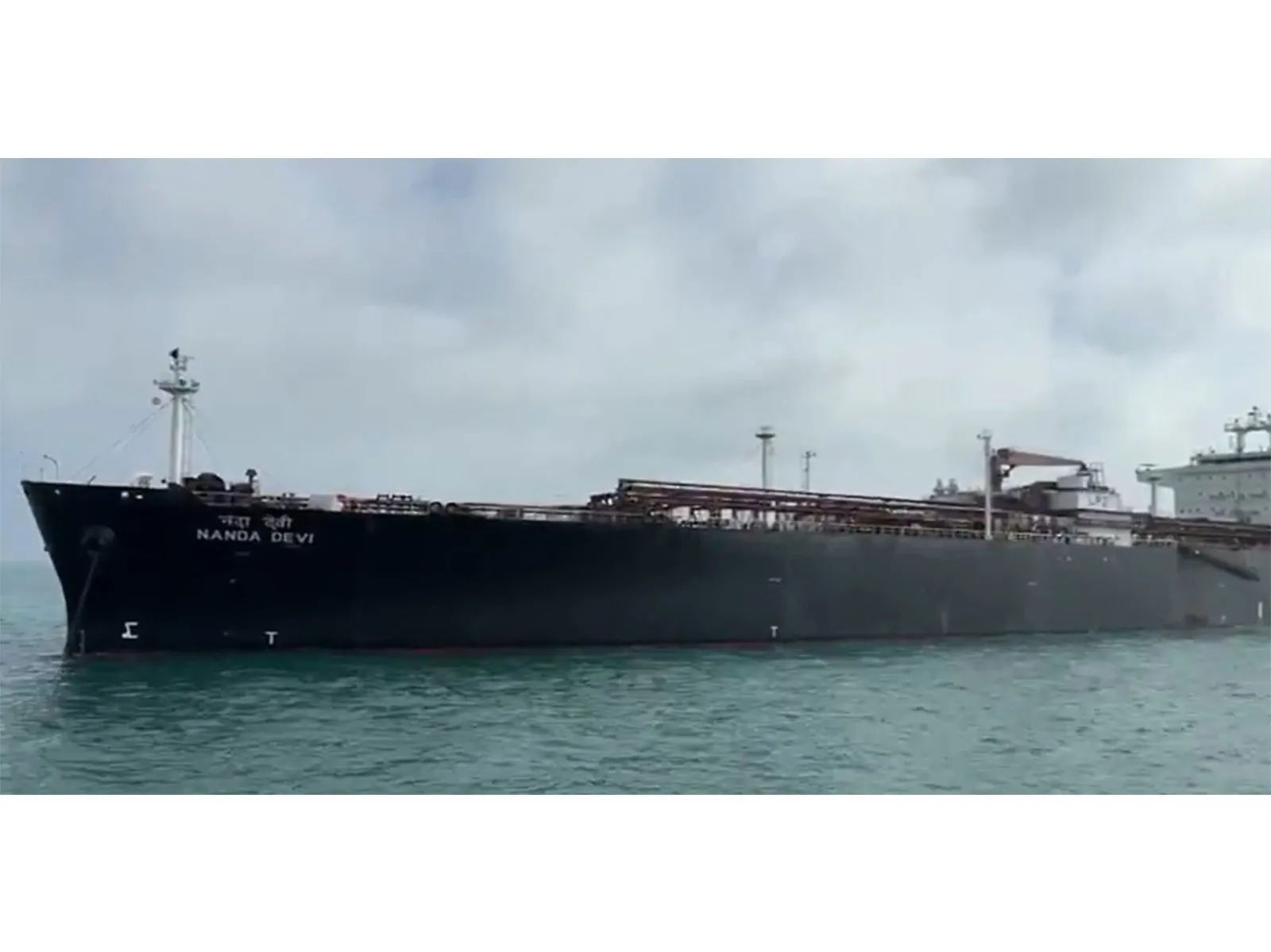
Gandhinagar, March 17: Indian LPG carrier Nanda Devi on Tuesday arrived at the Vadinar port in Gujarat's Jamnagar, carrying 46,500 metric tonnes of liquefied petroleum gas for ship-to-ship transfer at the anchorage.
The ship-to-ship transfer of LPG from mother vessel MT Nanda Devi to daughter vessel MT BW Birch will commence today.
Sushil Kumar Singh, Chairman of the Deendayal Port Authority (DPA), went on board the vessel to facilitate and interacted with the captain and crew of Nanda Devi.
This is the second LPG carrier that arrived in India after successfully passing through the Strait of Hormuz. On Monday evening, the Indian carrier LPG Shivalik, carrying a total of 46,000 metric tonnes of liquefied petroleum gas, had arrived at the Mudra Port. Of this, 20,000 MT will be unloaded at Mundra, while the remaining 26,000 MT is scheduled for Mangalore.
Earlier, the Chief Officer of the Nanda Devi vessel said that the initiative was taken by the Ministry of Ports, Shipping and Waterways and the Shipping Corporation of India, with the Indian and Iranian navies providing the necessary assistance to cross the Strait of Hormuz.
"I would like to thank everyone who was involved in this operation of crossing the Strait of Hormuz. The initiative was taken by the Indian Ministry, Shipping Corporation of India, with the help of the Indian Navy and the Iranian Navy. Vessel transmitted the Hormuz safely, now it is enroute to Kandla, Gujarat and will be serving a huge amount of LPG, 46,000 metric tonnes. This will help in the worldwide crisis of LPG. We will continue to serve the LPG in future also," he said.
Indian-flagged vessel, 'Jag Laadki', which sailed from the UAE, carrying about 81,000 tonnes of Murban crude oil, is safely en route to India, Rajesh Kumar Sinha, Special Secretary in the Shipping Ministry said in an interministerial briefing on Monday. The official said that all Indian seafarers in the Persian Gulf area are safe and no incident has been reported in the last 24 hours.
Consequently, there are now 22 Indian-flagged vessels remaining in the Persian Gulf, carrying a total of 611 seafarers. (ANI)