


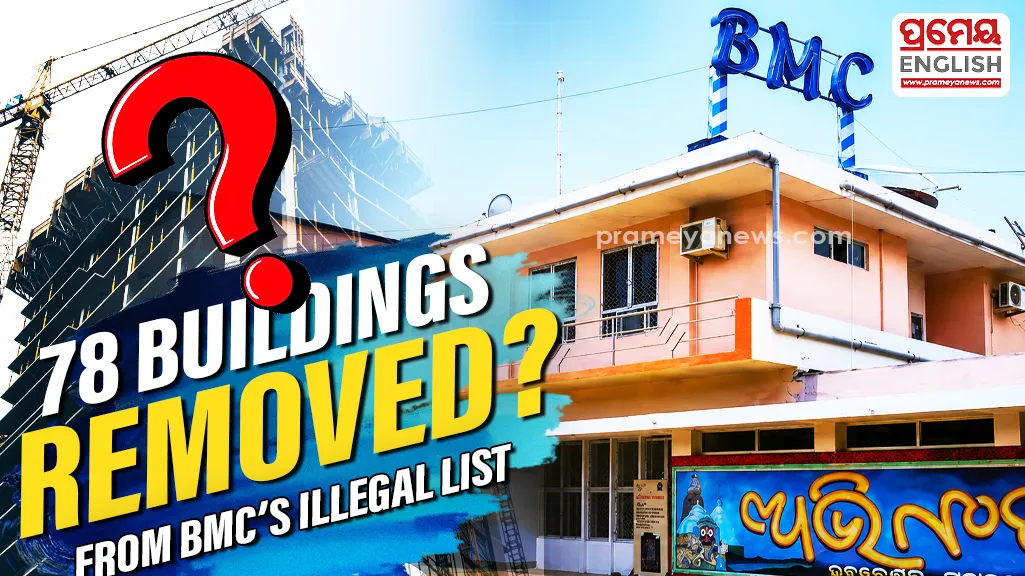
Bhubaneswar, Aug 11: The Bhubaneswar Municipal Corporation (BMC) is facing growing questions over its survey and classification of allegedly illegal commercial buildings, after 78 structures earlier identified as unauthorised were removed from its latest list submitted to the Supreme Court.
The controversy centres on several establishments, including police stations, administrative academies, hospitals run by trusts, offices of government undertakings, hostels and government educational institutions, which were reportedly classified as commercial establishments under BMC norms.
Following the Supreme Court’s intervention in a case concerning unauthorised commercial structures, the BMC issued show-cause notices to 4,632 establishments. The civic body informed the apex court that the list had been prepared following a survey.
However, questions have been raised over the basis on which institutions such as police stations, training academies, hospitals and educational establishments were classified as commercial buildings. Several market complexes belonging to the Bhubaneswar Development Authority (BDA) were also reportedly included in the list, despite having received plan approval from the BDA itself.
The issue has become more contentious because the BMC’s May survey had identified 153 commercial buildings across three zones as allegedly operating without approved building plans. However, in the list submitted before the Supreme Court on July 31, only 75 of those buildings remained, while 78 were removed.
This has led to questions over how 78 buildings allegedly classified as illegal in May could be excluded from the list within just 45 days.
Questions are also being raised about BMC’s tax assessment system. If these buildings were allegedly operating commercially, concerns have been raised over how the civic body continued to collect property and other taxes from them without identifying their commercial use.
BMC’s holding tax collection has reportedly increased from around Rs 42 crore to Rs 100 crore over the past six years. However, questions remain over whether the civic body suffered revenue losses because of allegedly incorrect assessments of commercial properties.
Real estate expert Bimalendu Pradhan alleged that BMC had knowingly collected commercial taxes from properties operating under residential plans. He further alleged that the civic body hurriedly prepared the list and submitted it to the Supreme Court in an attempt to cover up its own lapses.
Earlier, the BMC Commissioner had clarified that around 5,000 notices were issued based on data obtained from the holding tax portal. Establishments operating for commercial purposes were asked to submit their documents again for verification.
The controversy has now raised further questions about who conducted the survey, who approved the findings and under whose authority the information was submitted before the Supreme Court. Several establishments are reportedly considering legal action against the BMC.
The key question now remains: if 78 buildings were classified as unauthorised in May, what led to their removal from the latest list within 45 days-and can the revised list submitted by the BMC be considered legally reliable?