


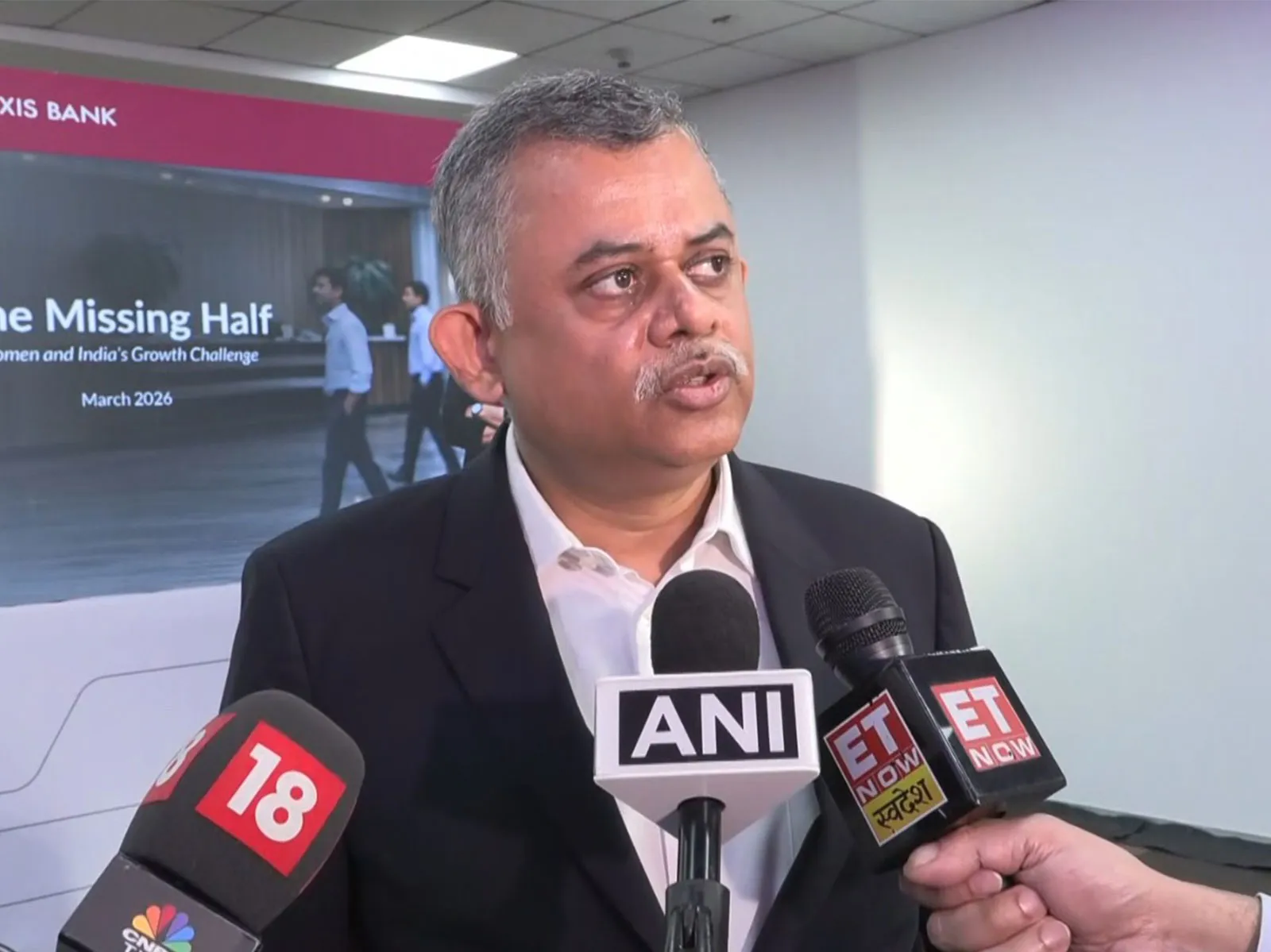
Mumbai, March 9: In a sharp assessment of India's macroeconomic vulnerabilities, Neelkanth Mishra, Chief Economist of Axis Bank and Head of Global Research at Axis Capital, warned that a sustained spike in global energy prices could severely disrupt India's growth trajectory and balance of payments.
In an interview with ANI, Mishra highlighted that India's heavy reliance on imported "dense energy" makes it a primary target for global price volatility.
"Every dollar increase per barrel costs approximately $1.8 billion annually. For instance, a $50 increase in oil prices represents a $90 billion impact, which is more than 2% of our GDP if sustained for a year."
Mishra's analysis centres on India's deep-rooted exposure to imported commodities. He noted that India currently imports 50 per cent of its "dense energy," a category that includes not only crude oil and natural gas but also fertiliser and edible oils.
"All of that exposure is highly vulnerable at this stage," Mishra stated, explaining that a major price hike would cause a "significant disruption in the balance of payments."
He further described the current geopolitical situation as a "game of brinkmanship that may play out for four to six weeks" and that it serves the interests of neither the United States nor China.
"Because this conflict does not serve the interests of China or the US, it is reasonable to expect it to be short-lived," Mishra argued.
He projected a conclusion to the hostilities by the end of April 2026, noting that "both sides have a limited threshold for pain." He highlighted that West Asian producers are struggling with market access, while the U.S. faces political pressure from rising domestic fuel prices.
Addressing concerns about the Consumer Price Index (CPI), Mishra suggested that the immediate impact on the average Indian consumer might be muted, thanks to a buffer held by Oil Marketing Companies (OMCs).
"On the fuel side, OMCs are sitting on significant buffers because retail pump prices remained unchanged while global prices were low," he explained. "They can likely withstand higher costs for a few months without passing them on to consumers."
However, he warned that the non-fuel half of energy imports--such as industrial gas and fertilisers--would likely see a 30 to 50 basis point increase in the CPI. For investors, Mishra noted that the "primary concern for markets right now is not inflation, but rather terms of trade, the cost of energy, and rupee volatility."
When asked if the Reserve Bank of India (RBI) should immediately hike interest rates, Mishra advised patience. He stated that immediate action isn't warranted if the conflict lasts only six weeks. "However, if it evolves into a year-long conflict, monetary policy action will be necessary," he cautioned.
Regarding remittances, which are a vital source of foreign exchange for India, Mishra believes they will remain stable unless the crisis extends beyond six months. "If it lasts over six months, emergency measures would be required to reduce energy demand, but that is not my base case," he concluded. (ANI)