


Delhi, March 6: In a significant step towards strengthening industry-driven skill development and deepening Government–industry collaboration, the Directorate General of Training (DGT), Ministry of Skill Development and Entrepreneurship (MSDE), Government of India, has signed a Flexible Memorandum of Understanding (Flexi-MoU) with Bajaj Auto Ltd., one of India’s leading automotive manufacturers, under the revised Flexi-MoU Scheme (June 2024).
The partnership will enable Bajaj Auto Ltd. to operate as an Industry Training Partner (ITP) and deliver NSQF-aligned, industry-integrated training programs at its manufacturing facilities in Maharashtra and Uttarakhand. In the first year itself, Bajaj Auto has proposed an intake of 1,000 trainees, with structured training programs of up to 24 months combining classroom instruction with intensive shopfloor exposure using advanced manufacturing systems.
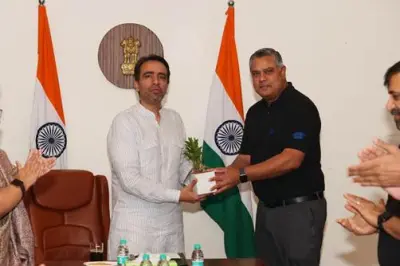
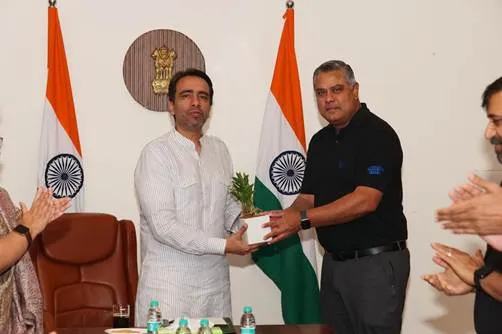
Speaking on the occasion, Minister of State (Independent Charge), Ministry of Skill Development and Entrepreneurship and Minister of State for Education, Government of India, Jayant Chaudhary said: “I welcome this partnership as an important step towards strengthening industry-linked skilling in India. Initiatives like these reflect how our skilling ecosystem is evolving to become more closely aligned with the needs of industry. When training is connected to real production environments and modern technologies, it helps young people gain practical experience and become truly job-ready. Such collaborations play a vital role in building a strong pipeline of skilled talent for the country and will be instrumental as India moves towards the vision of Viksit Bharat 2047 and positions itself as a global hub for skilled workforce.”
The signing ceremony was graced by Debashree Mukherjee, Secretary, MSDE and Dilip Kumar, Director General, Directorate General of Training (DGT), Sunil Kumar Gupta, Deputy Director General, DGT who attended the event and emphasized the importance of deepening industry partnerships to strengthen demand-driven skilling. The event was also attended by Shri Pranav Choudhary, Director (Curriculum Development), DGT, and Hemant D Ganjare, Director (CFI) DGT, along with officials from the DGT. From Bajaj Auto Limited, Ravi Kyran Ramasamy, Chief HR Officer, along with other representatives of the company, participated in the ceremony, marking a significant step towards expanding industry-integrated training opportunities for India’s youth.
The Flexi-MoU Scheme, implemented by DGT under MSDE, provides industries the flexibility to design customized training programs aligned with emerging technologies and sectoral demands while maintaining alignment with the National Skills Qualification Framework (NSQF). The scheme mandates a minimum annual training capacity of 100 trainees, industry-led practical and formative assessments, and centralized Computer-Based Theoretical (CBT) examinations conducted by DGT. Successful candidates are awarded a National Trade Certificate (NTC), making them eligible for apprenticeship opportunities.
Under the proposed implementation plan, trainees will receive exposure to advanced automotive manufacturing systems, production dojos, quality control systems, plant maintenance technologies, mechatronics systems, welding technologies, assembly operations and logistics management, among others. All courses will be NSQF-aligned and delivered through a structured industry-integrated model leveraging Bajaj Auto’s existing training infrastructure.
The collaboration aims to strengthen industry-aligned skill development within the automotive manufacturing ecosystem while enhancing employability and placement outcomes through exposure to real-time production environments. It is expected to help create a sustainable pipeline of skilled technicians, suppliers, and vendor networks, while also expanding structured career pathways through apprenticeships and long-term employment opportunities.
As per Flexi-MoU Scheme guidelines, Industrial Training Partners are required to ensure placement of at least 50% of successful trainees and may leverage CSR funds to support training costs and stipends. Bajaj Auto has demonstrated a strong commitment to skill development, with nearly 70–80% of its CSR expenditure focused on skilling initiatives. Through initiatives such as Bajaj Engineering Skills Training (BEST), Bajaj Manufacturing Systems (BMS) and Bajaj STEP (Service Technician Excellence Program), the company is already impacting over 90,000 students annually across India.
The Flexi-MoU signed between DGT and Bajaj Auto will remain valid for ten years, extendable subject to performance outcomes in enrolment, learning achievements and placements, in line with the scheme provisions.
This collaboration with Bajaj Auto Ltd. marks another milestone in MSDE’s mission to create a future-ready workforce, aligned with India’s manufacturing growth ambitions and the larger national objective of building a skilled, self-reliant and globally competitive India.