

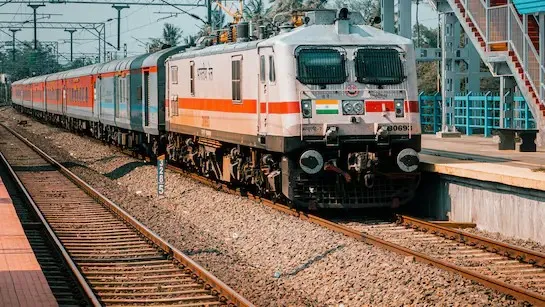
Bhubaneswar, March 17: In view of sustained passenger demand and to ensure continued travel convenience, the Indian Railways has approved the regularisation of several special train services into regular express trains.
The Ministry of Railways has accorded approval for the conversion of the six special trains into regular express services.
Train Details:
1. Train No. 02832/02831 Bhubaneswar–Dhanbad–Bhubaneswar Special will now operate as Train No. 18403/18404 Bhubaneswar–Dhanbad–Bhubaneswar Express.
2. Train No. 08439/08440 Puri–Patna–Puri Special will now operate as Train No. 18405/18406 Puri–Patna–Puri Express.
3. Train No. 08583/08584 Visakhapatnam–Tirupati–Visakhapatnam Special will now operate as Train No. 18507/18508 Visakhapatnam–Tirupati–Visakhapatnam Express.
4. Train No. 08581/08582 Visakhapatnam–SMVT Bengaluru–Visakhapatnam Special will now operate as Train No. 18509/18510 Visakhapatnam–SMVT Bengaluru–Visakhapatnam Express.
5. Train No. 08547/08548 Visakhapatnam–Tirupati–Visakhapatnam Special will now operate as Train No. 18505/18506 Visakhapatnam–Tirupati–Visakhapatnam Express.
6. Train No. 08579/08580 Visakhapatnam–Charlapalli–Visakhapatnam Special will now operate as Train No. 18527/18528 Visakhapatnam–Charlapalli–Visakhapatnam Express.
According to an ECoR statement, these trains have witnessed encouraging patronage since their introduction as special services. Considering the consistent demand and the need to further strengthen rail connectivity, their conversion into regular services will provide enhanced convenience and reliability to passengers.
“The regularised services connect important destinations such as Bhubaneswar, Puri, Patna, Dhanbad, Visakhapatnam, Tirupati, Bengaluru, and the Hyderabad region, thereby facilitating seamless travel across Odisha, Andhra Pradesh, Telangana, Bihar, Jharkhand, and Karnataka,” it said.
The stoppages, timings, and composition of these trains will remain unchanged as per their existing operation as special services. The dates of commencement of these regular services will be notified separately.
This initiative underscores the continued commitment of Indian Railways to respond proactively to passenger needs while strengthening regional connectivity and ensuring safe, comfortable, and reliable travel, the added the ECoR statement.