


Mumbai, March 17: Alia Bhatt and Ranbir Kapoor were spotted at the Mumbai airport on Tuesay morning on their return from a brief birthday getaway.
The couple had travelled with their daughter Raha to celebrate Alia's 33rd birthday away from the busy city life.
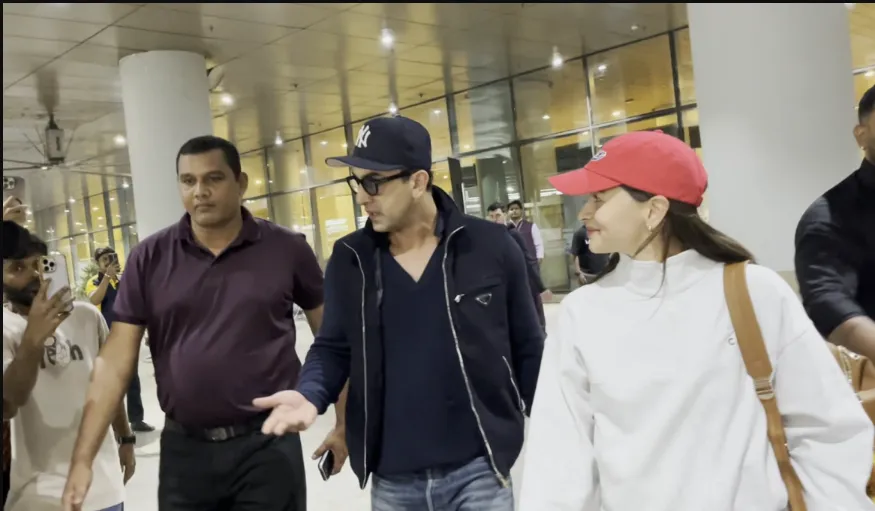
In the early hours today, Alia and Ranbir were spotted walking out of the arrival terminal with a few members of their team. As soon as they stepped outside, paparazzi gathered around them and wished Alia a happy birthday.
Soon after, the 'Animal' actor shared a light-hearted exchange with the paparazzi that made many people smile. While walking towards their car, the actor jokingly asked if they had brought a birthday cake for Alia. Looking at them playfully, he said, "Cake Nahi Laye?" He then made a funny, disappointed face before heading towards his car.
For the airport look, the couple kept it simple and comfortable. Alia opted for an all-white co-ord set with a high-neck jacket and loose pants. She paired the outfit with a red cap, minimal makeup, and open hair. Ranbir, on the other hand, looked handsome in a blue full-sleeved T-shirt with a black half-jacket, denim jeans, and a cap, which he paired with cool sunglasses.
On the work front, Alia will next be seen in the much-anticipated spy thriller 'Alpha'. The film also stars Sharvari Wagh, along with Anil Kapoor and Bobby Deol in key roles. The film is directed by Shiv Rawail, who previously directed the series 'The Railway Men'. It is produced by Aditya Chopra under the banner of Yash Raj Films. 'Alpha' will arrive in theatres on July 10, 2026.
Ranbir, on the other hand, will be seen playing Lord Ram in Nitesh Tiwari's much-awaited two-part epic 'Ramayana'.
Interestingly, the husband-and-wife duo, Ranbir and Alia, will also be seen headlining Sanjay Leela Bhansali's directorial 'Love and War', which also stars Vicky Kaushal. The film was officially announced in January 2024. (ANI)