

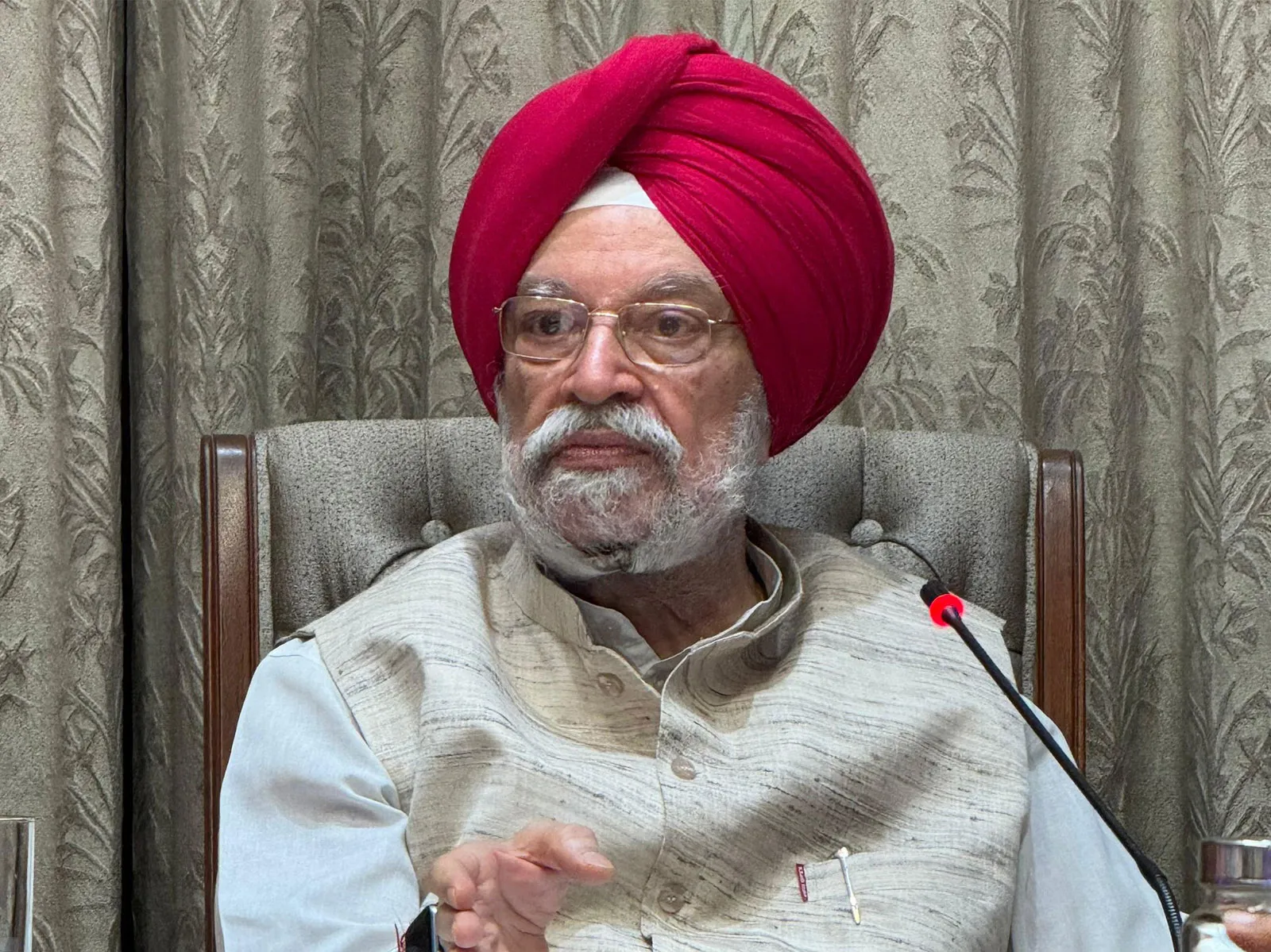
New Delhi, March 16: The daughter of Union Minister Hardeep Singh Puri has filed a Rs 10 crore defamation suit before a court seeking permanent and mandatory injunctions, damages, and an unconditional apology against several individuals and online platforms for allegedly publishing and circulating defamatory content linking her to the criminal activities of Jeffrey Epstein.
According to the civil suit, the plaintiff, an investment professional with nearly three decades of global experience, including professional engagements on Wall Street, has alleged that a coordinated and malicious online campaign was orchestrated to tarnish her reputation by spreading false and misleading allegations across social media and digital platforms.
The suit states that beginning around February 22, 2026, a series of defamatory posts, articles, videos, threads, thumbnails and captions were published and amplified online, attempting to associate the plaintiff with Jeffrey Epstein and his criminal activities.
The content was allegedly circulated widely on platforms including X, YouTube, Instagram, Facebook, LinkedIn, as well as blogs and digital news portals.
The plaintiff has alleged that the defamatory campaign comprised a coordinated series of reports, posts, videos, shorts, thumbnails, captions and community posts aimed at spreading false narratives and causing reputational damage.
According to the suit, several social media accounts amplified the content, along with several unidentified persons described in the suit as "John Doe(s)" or "Ashok Kumar(s)."
It claims that the defendants acted in concert to propagate a fabricated narrative suggesting that the plaintiff had direct or indirect financial, personal or business links with Jeffrey Epstein or his associates. It is also alleged that online posts falsely claimed that the plaintiff or the firm where she worked, Realm Partners LLC, received funding or financial benefits from Epstein or his network.
Further, the suit states that certain posts also falsely suggested that the plaintiff, along with Robert Millard, played a role in engineering the collapse of Lehman Brothers. The plaintiff has described these allegations as entirely false, malicious and devoid of any factual basis.
According to the plaint, the defendants allegedly used sensationalist and manipulative formats such as edited videos, misleading captions and doctored thumbnails to maximise public outrage and digital virality, thereby amplifying reputational harm.
The plaintiff has further stated that the defamatory content has been widely viewed and shared globally, including in the National Capital Territory of Delhi, causing continuing damage to her professional reputation, personal dignity and standing in the financial industry.
The suit also alleges that the plaintiff has been targeted and discredited because she is the daughter of Union Minister Hardeep Singh Puri, who previously served in the Indian Foreign Service (IFS) and currently holds a senior position in the Union Cabinet.
Before approaching the court, the plaintiff, through her counsel, issued a cease-and-desist notice dated March 6, 2026, directing the defendants to remove the impugned content and refrain from further defamatory publication within 72 hours. However, the suit claims that despite receiving the notice, the defendants and intermediary platforms failed to comply and continued to circulate and host the allegedly defamatory material.
In light of these circumstances, the plaintiff has approached the court seeking removal of the impugned content, a permanent injunction restraining further publication of defamatory material, damages of Rs 10 crore for reputational harm, and an unconditional apology from the defendants. (ANI)