


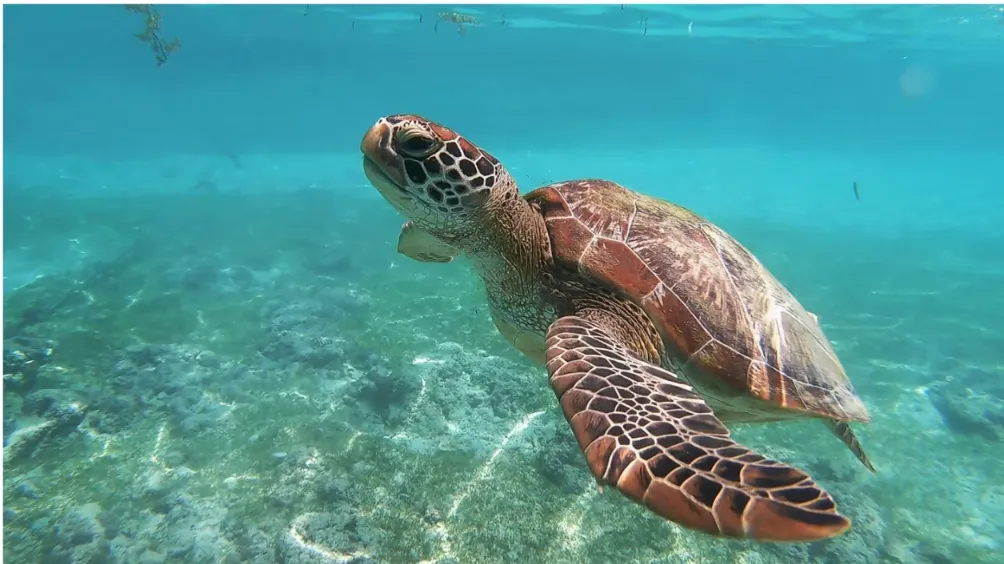
Bhubaneswar, May 23: Turtles are vital indicators of environmental health and play a crucial role in maintaining ecological balance. From keeping water bodies clean to supporting biodiversity, their contribution to nature is immense. However, several turtle species are now facing threats due to human activities and environmental changes.
Every year, thousands of rare Olive Ridley sea turtles arrive at the Rushikulya river mouth along Odisha’s Ganjam coast for mass nesting. After laying eggs, the turtles return to the sea, but many hatchlings fail to make it back to the water safely. Researchers say excessive artificial lighting in coastal villages is one of the major reasons behind the deaths of hatchlings.
According to Dr. Bibhas Pandav of the Wildlife Institute of India, hatchlings are naturally attracted to light. Instead of moving towards the sea, they often move inland due to bright LED and high-mast lights, eventually dying from exhaustion, predator attacks, or entanglement in fishing nets and barriers.
Experts have stressed the need for “turtle-friendly lighting” using yellow or red-spectrum lights instead of bright white LEDs within a 7-8 km coastal stretch near Rushikulya. Such measures would help hatchlings safely return to the sea.
Forest Department data revealed that while 9.04 lakh Olive Ridley turtles participated in mass nesting at Rushikulya in 2025, the number dropped significantly to around 2.15 lakh in 2026. Coastal erosion, changing weather conditions and habitat disturbances are being cited as key concerns.
Meanwhile, Ganjam district is also home to a rare population of Indian Flapshell Turtles at Golia village in Buguda block. Thousands of turtles inhabit a pond near Langaleswar Mahadev Temple, but locals allege that lack of conservation efforts has led to a decline in their numbers.
Villagers and environmentalists have urged the Forest Department to strengthen conservation measures and develop the site under an eco-tourism project. Proposals for solar lighting, fencing, staff deployment and breeding-friendly infrastructure have already been submitted for approval.