



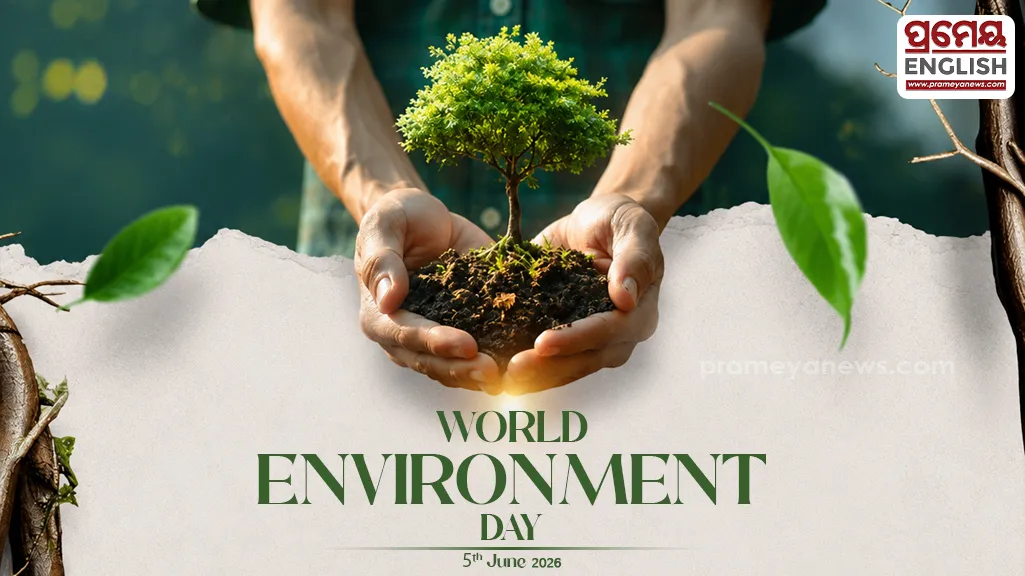
Bhubaneswar, June 5: As the world observes World Environment Day, rising temperatures, erratic rainfall, shrinking green cover, and increasing pollution are becoming stark reminders of the environmental crisis confronting humanity. Climate change is no longer a distant threat but a reality affecting everyday life, from extreme heatwaves to water scarcity and declining air quality.
Experts warn that unless immediate and collective action is taken, future generations could face severe environmental challenges, including food insecurity, water shortages, and public health crises.
The primary causes of environmental degradation include large-scale deforestation, rapid urbanization, industrial emissions, excessive use of fossil fuels, plastic pollution, and the destruction of natural ecosystems. Across India, forests are giving way to concrete structures, while the number of vehicles on roads continues to rise, adding to carbon emissions and air pollution.
A live example can be seen in cities such as Bhubaneswar, Delhi, and Bengaluru, where temperatures have risen significantly over the past decade. The reduction of green spaces and expansion of urban infrastructure have intensified the urban heat island effect, making cities hotter and less sustainable.
"Saving the environment starts at home. Every family should plant and nurture at least two trees. Rainwater harvesting, reducing plastic use, and proper waste segregation can make a significant difference. Small actions taken by millions of people can create a major positive impact," says Sunita, Environmental Awareness Volunteer and an actress.
Environmentalists point out that tree plantation drives alone are not enough. The survival and maintenance of planted trees are equally important. Many saplings die due to lack of care, reducing the effectiveness of afforestation efforts.
While Satya- a youth social activist and an actor said, “One of the biggest reasons behind environmental degradation is uncontrolled deforestation and pollution. We need to change our lifestyle choices. Using public transport, cycling for short distances, conserving electricity, and reducing unnecessary consumption can help lower our environmental footprint."
Studies show that transportation and industrial sectors contribute significantly to greenhouse gas emissions. As populations grow and cities expand, sustainable development has become a necessity rather than a choice.
Environmental conservation, however, cannot depend solely on individual efforts. Experts stress the need for strong government policies and effective implementation.
Sristi, a mother & environmental volunteer added, “As a mother, I am deeply concerned about the kind of environment we will leave behind for our children. The government should take stronger steps to protect forests, create more green spaces in cities, and strictly control industrial pollution. At the same time, environmental awareness should be introduced from an early age in schools so that children grow up understanding the value of nature and their responsibility towards protecting it. The future of our children depends on the actions we take today."
Governments can also promote renewable energy, improve waste management systems, encourage electric mobility, and support large-scale restoration of degraded forests and wetlands. Such measures would not only protect the environment but also contribute to long-term economic and public health benefits.
World Environment Day is more than a symbolic observance, it is a reminder that the future of the planet depends on the choices made today. Protecting the environment is not solely the responsibility of governments or environmental organizations; it is a shared responsibility of every citizen.
Whether it is planting a tree, reducing waste, conserving water, or supporting sustainable practices, every action matters. If society acts collectively today, future generations can inherit a cleaner, greener, and healthier world.