.webp)

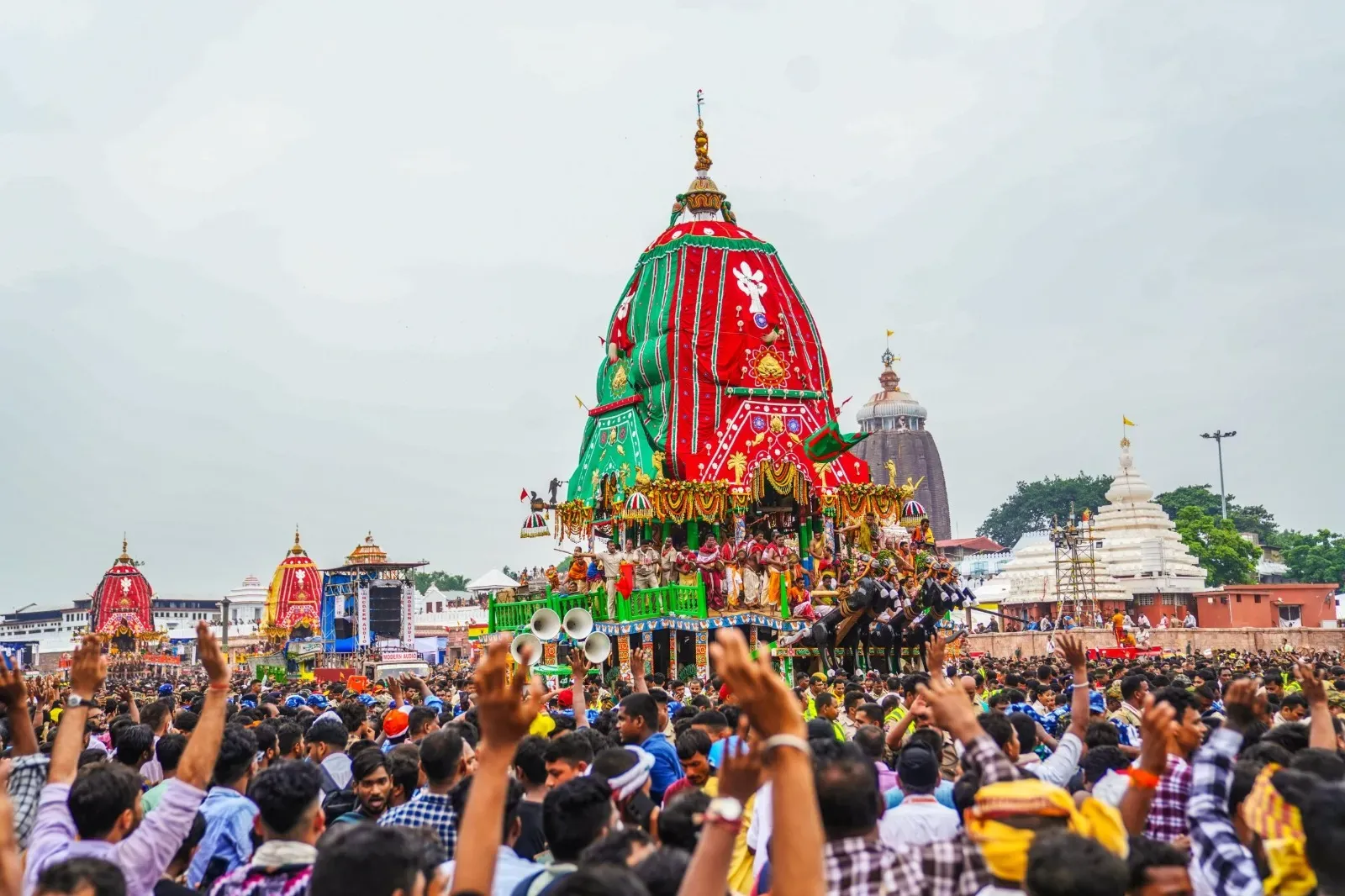
The annual Rath Yatra is far more than a religious festival-it is a timeless celebration of devotion, faith, and Sanatan tradition. Among the three majestic chariots that carry the Holy Trinity during the festival, Lord Balabhadra’s chariot, Taladhwaja, holds a unique place for its symbolism, structure, and deep spiritual significance.
Lord Balabhadra, the elder brother of Lord Jagannath, is revered as Bada Thakura (the Elder Lord). His chariot is therefore affectionately known by many devotees as the "Bada Rath" (Great Chariot). It is also referred to as Langaladhwaja, reflecting Lord Balabhadra’s association with the plough (Hala) and mace (Musala)-his two divine weapons.
According to Jagannath tradition, both the chariot and the deity are considered divine, giving rise to the popular belief: "The chariot is divine, and so is the one who rides it." Devotees believe that merely beholding the sacred Taladhwaja chariot during Rath Yatra helps cleanse one's sins and brings the blessings of the Lord.
Why is it called 'Taladhwaja'?
The name Taladhwaja comes from two Sanskrit words-'Tala', meaning the palmyra palm tree, and 'Dhwaja', meaning flag. According to Hindu scriptures and temple tradition, Lord Balabhadra’s chariot bears a flag featuring the symbol of a palm tree, which gives the chariot its distinctive name.
Standing around 44 feet tall, Taladhwaja is built with 14 massive wooden wheels. Its canopy is adorned with red and green cloth, colours believed to symbolize strength, peace, prosperity, and harmony.
The chariot is driven by the divine charioteer Matali, while four white horses pull it. These horses are believed to represent the virtues of righteousness, truth, courage, and purity.
Temple tradition also holds that Lord Narasimha resides within the sanctum of the chariot, protecting it throughout the journey. Lord Brahma and Lord Shiva are also regarded as its divine guardians.
Why is the chariot worshipped?
According to Hindu belief, during Rath Yatra the Lord Himself resides on the chariot to grant darshan to devotees. Therefore, not only the idols but the chariots themselves are worshipped as sacred manifestations of the divine.
Devotees believe that seeing the Taladhwaja chariot, touching its ropes, or participating in pulling it can wash away the sins accumulated over many lifetimes and earn the blessings of Lord Balabhadra.
The mythological story behind Taladhwaja
The name Taladhwaja is also rooted in an intriguing mythological legend.
Ancient scriptures describe Kadambari, a sacred beverage prepared from the nectar of the flowers of the Tala (palmyra) tree, as one of Lord Balarama's favourite drinks. However, a vast palm forest was under the control of a powerful demon named Talaketu, who forbade anyone from entering it. Even sages and celestial beings suffered under his tyranny.
To restore peace and protect the devotees, Lord Balarama entered the palm forest and challenged Talaketu in battle. After a fierce fight, He defeated and killed the demon, freeing the forest for everyone once again.
To commemorate this victory of righteousness over evil, the symbol of the palm tree was placed on Lord Balabhadra's chariot flag. Since then, the chariot has been known as Taladhwaja.
Thus, the name is much more than a simple identifier. It stands as a powerful symbol of the triumph of dharma over adharma, Lord Balabhadra's divine strength, and His eternal role as the protector of devotees.
Every year, as Taladhwaja rolls through the Grand Road of Puri during Rath Yatra, it carries with it centuries of faith, mythology, and spiritual significance, inspiring millions of devotees from across the world.
.webp)