



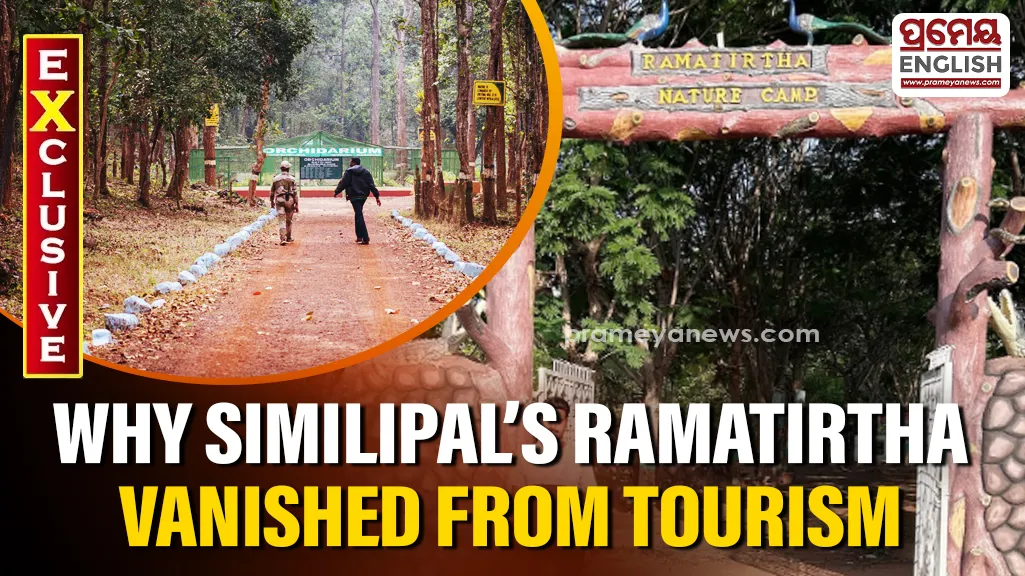
Baripada, Jul 23: Once celebrated as the gateway to the Similipal Tiger Reserve and a favourite retreat for nature lovers, the Ramatirtha Nature Camp has remained closed for nearly two years, leaving tourists and local residents disappointed. The eco-tourism destination has also disappeared from the EcoTour Odisha online booking portal, making overnight stays at the scenic location impossible.
Nestled at the confluence of the Khairi and Bhandan rivers, just 4 km from Jashipur, the camp offered modern accommodation, including deluxe cottages, tribal huts, air-conditioned dormitories and non-AC dormitories. It served as an ideal base for visitors exploring Similipal as well as nearby attractions such as Bhimkund, Khiching Temple and Benisagar. Unlike the tiger reserve, which remains closed during the monsoon season, the nature camp earlier welcomed visitors throughout the year, making it a popular monsoon tourism destination.
The camp's closure has surprised many tourism stakeholders, especially when most other nature camps inside Similipal continue to witness growing tourist footfall. During peak tourist season, hotels in Jashipur often remain fully booked, raising questions over the claim that Ramatirtha failed to attract enough visitors.
Similipal Tiger Reserve Field Director and Regional Chief Conservator of Forests Dr. Prakash Chand Gogineni said the camp was closed because of poor tourist occupancy. However, allegations have also surfaced that the premises were being used by certain groups for private gatherings instead of tourism activities.
Former BJD MLA candidate from Jashipur, Chakradhar Hembram, questioned the official explanation, arguing that the demand for accommodation in the region remains high while tourists frequently fail to secure bookings at other eco-tourism camps. He has urged the authorities to reopen the facility for visitors.
A Destination Rich in Mythology and Heritage
Beyond its natural beauty, Ramatirtha holds immense religious and historical significance.
According to local legend, Lord Rama, Goddess Sita and Lord Lakshmana rested at the site during their exile in the Tretaya Yuga. It is believed that Goddess Sita washed her feet in the river and worshipped Lord Shiva here. Devotees also point to footprints believed to belong to Lord Rama, preserved on a rock, as well as several other relics linked to the epic.
The annual Tusu Festival, a scenic riverside park, a museum and the tranquil forest surroundings have long made Ramatirtha a unique blend of eco-tourism, culture and spirituality.
The closure has also coincided with the state's decision to discontinue the Ramatirtha Crocodile Breeding and Conservation Project, established in 1979. Tourism enthusiasts believe the combined loss of the nature camp and the conservation centre has significantly diminished one of Mayurbhanj's most distinctive tourist destinations and are demanding its revival at the earliest.