


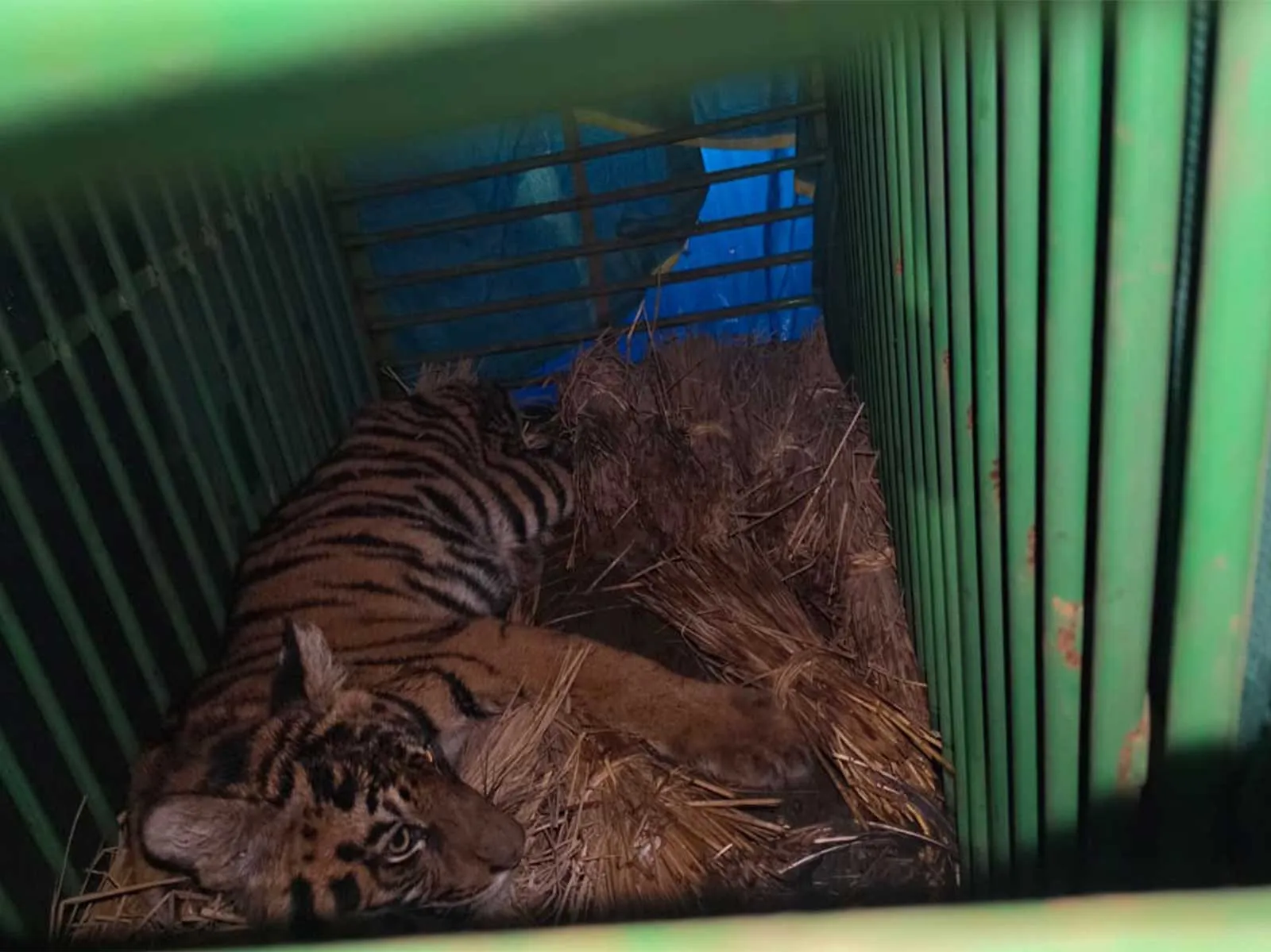
Baripada, Sept 26: A tiger cub rescued from Kaparakhai Village under the Thakurmunda Range in Mayurbhanj district has been safely transported to the Forest campus, where it is now under close observation and receiving dedicated veterinary care.
Officials confirmed that the cub has been placed in isolation to ensure its safety, minimise stress, and prevent any risk of infection while treatment continues.
Following its arrival at the campus, veterinary teams immediately initiated medical intervention. The cub was carefully assessed and began a supervised feeding regimen designed to rebuild its strength. On the 25th, the animal consumed approximately 2.5 kilograms of meat mixed with oral medication. Staff noted that the cub remained calm throughout the process and has been showing gradual signs of improvement, slowly regaining energy and physical condition.
Isolation remains a key part of the recovery protocol. By keeping the cub away from other animals and limiting external disturbance, forest authorities aim to create a stable environment that supports healing. Veterinary experts are monitoring its behaviour, appetite, and overall health closely. Plans are in place to collect blood samples for laboratory testing in the coming days. These tests will help determine the cub’s nutritional status, rule out any underlying infections or deficiencies, and guide further medical decisions.
In addition to the medication already administered, the cub will continue to receive carefully measured feed today. The goal is to improve its strength and fitness steadily, ensuring that weight gain and muscle recovery progress without overburdening its system. Forest staff are maintaining a consistent routine of feeding, observation, and quiet care so that the young animal can adapt to its temporary surroundings with minimal stress.
The rescue and subsequent care reflect the ongoing efforts of forest department personnel in the Thakurmunda Range to protect vulnerable wildlife. When a tiger cub is found in or near human settlements, prompt intervention is essential to reduce the risk of conflict and to give the animal the best chance of survival. Isolation and professional veterinary support form the first critical steps in such cases.
Authorities have indicated that the cub’s progress will be reviewed regularly. Blood test results, combined with daily observations of appetite and behaviour, will shape the next phase of treatment. For now, the focus remains on stabilising the animal’s condition through proper nutrition, medication, and a calm, controlled environment.
Forest officials continue to emphasise the importance of public cooperation in wildlife rescue situations. Early reporting of distressed animals allows teams to respond quickly and begin life-saving care before the situation deteriorates. In this instance, the timely transport of the cub from Kaparakhai Village to the Forest campus has enabled immediate veterinary attention and a structured recovery programme.
As the young tiger receives its daily feed and rests in isolation, staff remain optimistic about its gradual improvement. The combination of medical treatment, nutritious meals, and careful monitoring offers the best prospect for the cub to regain full strength in the days ahead.