
.webp)


Cuttack, Jul 7: Rows of locked houses, crumbling walls, collapsed roofs and abandoned courtyards have become a common sight in many villages across Odisha. Homes that once echoed with the voices of large families now stand deserted, with only a handful of elderly residents remaining to guard them. Over the past few years, nearly 25 families have left the Parida Sahi locality of Kulakalapada village, located in Cuttack's 42 Mouza areas, in search of better opportunities, leaving behind a slowly disappearing settlement.
Most of the families migrated to cities such as Bhubaneswar, Cuttack, Rourkela, Kolkata and Jamshedpur for employment and eventually settled there permanently. While livelihood remains a major reason, aspirations for English-medium education, better healthcare and improved urban amenities have also driven families away from their native villages.
The story of Kulakalapada is not unique. Across Odisha, villages are steadily losing their population as thousands of young men and women migrate to major cities within India and abroad in search of jobs and a better future.
In Rayagada district's Kashipur block, the headquarters village of Godibali Gram Panchayat has witnessed a steady decline in population, with many homes lying vacant as residents migrate to Tamil Nadu, Telangana and Andhra Pradesh for work. In Akashaguda village of Koraput municipality, the number of families has dropped from nearly 80 to just 25.
Similarly, Baghuapat village in Angul district, despite being located in a mineral-rich region, has become almost devoid of young people, with most working-age residents employed as migrant labourers elsewhere. In Malkangiri district's MPV-59 village, the number of families has fallen from over 22 a decade ago to only six today.
Similar patterns are visible across the state. Middle-class families from towns like Jagatsinghpur increasingly relocate to Cuttack and Bhubaneswar to secure better educational opportunities for their children, while rural families move into district headquarters for the same reason. At the same time, Odisha's major cities—including Bhubaneswar, Cuttack, Berhampur, Rourkela, Puri, Sambalpur and Paradip—are witnessing rapid growth of informal settlements as migrants from different districts settle in search of work.
Experts attribute the trend to rapid urbanisation and the lack of sustainable livelihood opportunities in rural areas. Although governments have invested in roads, drinking water and other basic infrastructure, rural employment opportunities remain limited. Agriculture has become increasingly unattractive for the younger generation due to low returns, erratic weather, recurring droughts, floods and cyclones, leaving many farmlands uncultivated after the paddy harvest.
Former Information Commissioner and CYSD Secretary Jagadananda described the depopulation of villages as a serious social and economic concern. According to him, declining fertility rates and the absence of employment opportunities are contributing significantly to the shrinking rural population.
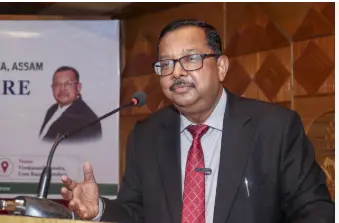
Social activist Umi Daniel pointed out that vast stretches of agricultural land are lying fallow while real estate plotting activities continue to expand. Citing survey findings, he noted that the average age of farmers in Odisha is now around 47 years, raising concerns about the future of agriculture. He stressed the need to diversify farming through horticulture, fisheries and poultry, establish food-processing industries, improve market access, and undertake family-wise livelihood and skill mapping, similar to initiatives implemented in neighbouring Andhra Pradesh.
According to the Labour Directorate, districts such as Balangir, Bargarh, Kalahandi, Nuapada, Subarnapur, Sundargarh, Khordha, Kendrapara, Puri, Ganjam, Gajapati, Rayagada, Koraput and Nabarangpur are among Odisha's major migration-prone regions. Every year, nearly 1.5 lakh registered workers migrate from these districts to states such as Gujarat, Karnataka, Maharashtra, Tamil Nadu, Telangana and Punjab, while many also travel overseas to countries including the United Arab Emirates, Oman, Saudi Arabia and Qatar for construction and other labour-intensive jobs.
The COVID-19 pandemic highlighted the scale of this migration when nearly one million Odia migrant workers returned home after nationwide lockdowns.
Many migrants say they left because farming no longer provides a reliable income. Frequent droughts, floods and cyclones have increased cultivation costs while reducing profits. The absence of quality schools, healthcare facilities and local employment has compelled families to relocate permanently to urban areas for the sake of their children's future.
Odisha has 1, 56,751 rural habitations, including 51,349 revenue villages, besides thousands of smaller hamlets. According to the 2011 Census, around 83 per cent of the state's population lived in rural areas and 17 per cent in urban centres. However, the government has set a target of increasing urbanisation to 40 per cent by 2036.
As cities continue to expand and absorb surrounding farmland, experts warn that Odisha is losing far more than its rural population. Along with empty villages, the state risks losing its traditional community life, cultural heritage, social bonds and agricultural identity. What is unfolding is not merely a demographic shift, but a transformation that could permanently reshape the social fabric of rural Odisha.
.webp)