


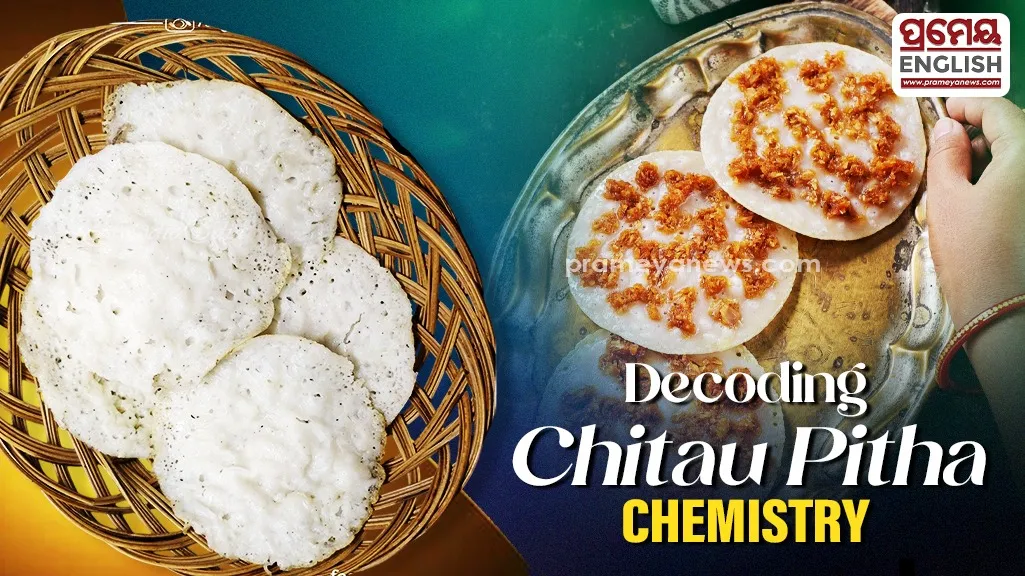
Culinary Chemistry behind Authentic Chitau Pitha
Preparing this beautiful traditional dish during Chitalagi Amavasya relies on precise molecular interactions. Raw white rice and grated coconut combine to form a unique structural matrix. This simple blend of complex carbohydrates, plant-based lipids, and water creates a dynamic physical system. Starch molecules from raw grains interact with rich coconut fats to build a highly stable and delicious base.
Molecular Changes during Batter Preparation
Soaking rice under running water removes surface starch before the main hydration phase. Submerging washed grains in water for three to four hours is a crucial mechanical step. Water molecules slowly penetrate the tough crystalline structure of raw rice. This vital process naturally loosens tightly packed amylose and amylopectin starches within the grain. When you combine soaked rice and grated coconut in a wet grinder, rapid mechanical friction shatters rigid cellular walls. You must add water gradually to achieve a smooth consistency that strongly resembles dosa batter. This intense physical blending generates a temporary culinary emulsion. Natural fats from coconut disperse evenly throughout the watery starch suspension. Adding salt introduces sodium and chloride ions that interact with available proteins to stabilize the wet mixture. You can also introduce sugar or natural jaggery at this resting stage to develop a mildly sweet flavor profile.
Thermal Dynamics inside Heavy Cast Iron
Heating your cooking surface over medium heat prepares the vessel for optimal thermal transfer. Using a traditional cast iron kadhai provides high thermal mass for sustained steady heat retention. Pouring a ladleful of batter into the greased center initiates immediate chemical reactions. You spread the liquid rapidly in a circular motion to form a even pancake. Heat energy conducts from the heavy cast iron bottom directly into the wet layer. Covering the kadhai traps rising moisture to create intense steaming action. This dual temperature environment rapidly triggers starch gelatinization. Hydrated starch granules absorb remaining free water as they swell up and burst open. This beautiful structural shift transforms the liquid suspension into a firm spongy network. While the upper portion gently steams and sets, the bottom surface touches the heavy metal directly. This localized contact heat creates a slightly crispy texture through gentle browning and Maillard reactions. Lightly greasing the cooking surface prevents structural tearing and vastly improves overall heat conduction. These swift thermal transformations successfully lock in delicate coconut aromas. You can easily serve the hot finished dish with sweet warm milk, jaggery syrup, savory dalma, or warm potato curry.