


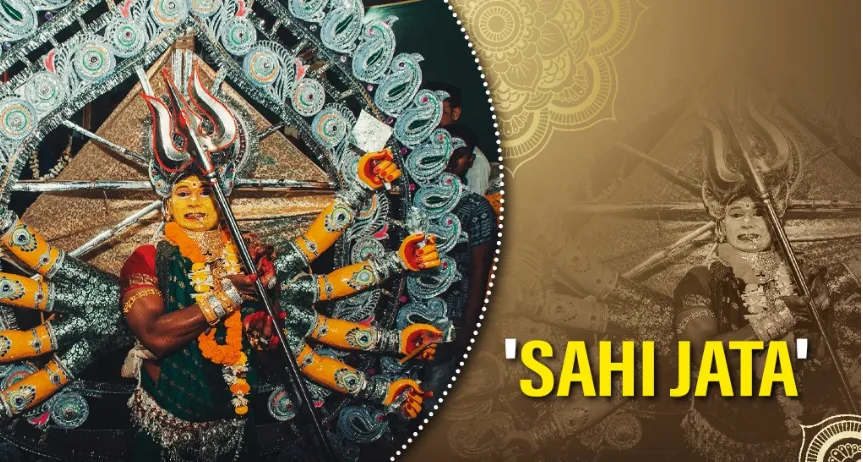

The ancient festival known as ‘Sahi Jata’ transforms the city of Puri into a vibrant stage of devotion, drama, and martial display. Considered perhaps the world’s oldest open-air festival, Sahi Jata enacts various episodes of the Ramayana in different sahis, or local byways.


It is a fascinating blend of spiritual tradition, folk theatre, and martial arts performances, making it a unique cultural event that bridges Odisha’s heritage with contemporary performing arts.


Puri, according to legend, celebrates 13 festivals in 12 months meaning that the city is almost always alive with festivities. Among these, Sahi Jata holds a special place due to its antiquity and grandeur.
Inception and observation
Dating back to the 12th century, Sahi Jata begins one day before Ram Navami, the birthday of Lord Ramachandra, observed on Chaitra Shukla Navami Tithi (the ninth day of the bright fortnight of Chaitra, typically in March–April). The festival continues for several days, culminating on Baishakh Dwitiya Tithi.


The celebration begins with Rama Janma Niti, the rituals marking the birth of Ramachandra, and concludes with Ramabhishek Niti, the coronation rituals of Lord Ram. Throughout the festival, different episodes of the Ramayana are dramatized at the Jagannath Ballabha Matha, combining devotional storytelling with open-air theatrical performances.


Structure and significance
Sahi Jata is divided into two phases:
Martial Arts Display: Tracing back to the ancient culture of Jagannath, the Choda Ganga kings encouraged common people to practice martial arts to protect the Jagannath temple from intruders.
Dramatic Episodes of the Ramayana: Specific characters such as Ravana, Parshuram, and Nrusingha are portrayed, giving audiences a vivid visual and spiritual experience.

The festival begins with the Yajna episode from the Ramayana, depicting King Dasaratha and his queens performing sacred rituals. Eight ancient Sahis of Puri participate in Sahi Jata, each associated with particular rituals and traditions: