
.webp)

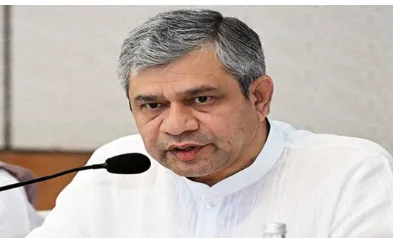
New Delhi, July 15: Continuing the 'Reform Express', Minister for Railways Ashwini Vaishnaw on Tuesday announced eight more structural reforms to modernise Indian Railways. With this, the total number of reforms implemented under the initiative has reached 17. The new reforms will bring significant changes in freight transportation, logistics, construction practices, project execution, wagon design, skilling and ease of doing business.
Addressing the media in Rail Bhawan, New Delhi, Vaishnaw said that Indian Railways is undertaking a series of reforms to build a future-ready railway system. These reforms are part of the Ministry's target of implementing 52 reforms in 52 weeks to enhance efficiency, promote innovation and strengthen the railway ecosystem. Vaishnaw said the reforms announced earlier under the Reform Express initiative have already started yielding encouraging results.
Vaishnaw said that India generates around 340 million tonnes of fly ash annually, of which nearly 96 million tonnes are utilised by the cement industry. Indian Railways transported about 13 million tonnes of fly ash during FY 2025-26, accounting for nearly four per cent of the country's total fly ash generation.
He said that fly ash has traditionally been transported through open wagons, resulting in dust pollution during loading, transportation and unloading. Fly ash also poses a significant environmental challenge when stored in large ash ponds at thermal power plants.
To address these issues, Indian Railways has introduced a new containerised transportation system for fly ash. Under the new policy, specially designed ISO-standard containers will be used for transportation. These containers can be loaded directly from the power plant through top-loading arrangements and unloaded using side-discharge or pneumatic systems without generating dust pollution.
Vaishnaw said the closed-container system will enable pollution-free transportation, facilitate safe storage within cement plants until the material is required, and significantly improve logistics efficiency. The containers can be handled through reach stackers, allowing seamless end-to-end movement from power plants to cement plants. The reform is expected to increase rail movement of fly ash, reduce dependence on road transport and convert an environmental challenge into an economically productive resource.
.webp)