

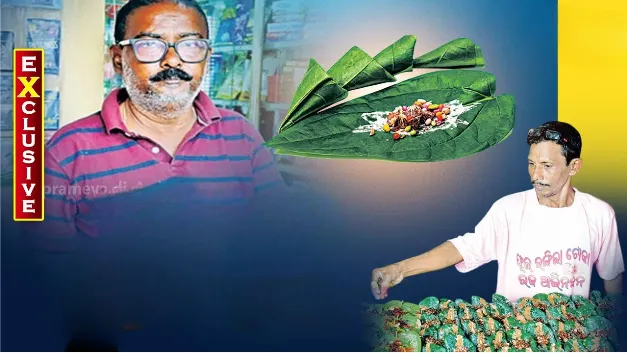
Cuttack, June 13: Known as the city of ‘adda’, Cuttack has long nurtured a unique culture where conversations flourish over cups of tea and betel leaves. From roadside tea stalls to neighbourhood paan shops, discussions begin with a cup of tea and an order for paan, often stretching from local issues to national politics and global affairs.
In Cuttack, paan is more than a habit-it is a social tradition. Offering a betel leaf to a friend, acquaintance or even a stranger is considered a gesture of warmth and respect. The exchange cuts across age, status and social standing. As a result, paan shops remain bustling throughout the day, serving as informal community hubs where people gather to share stories, debate issues and strengthen social bonds.
The city is home to nearly 10,000 paan shops spread across its lanes and neighbourhoods. From ‘jarda paan’ and deluxe varieties to ‘gundi’ and ‘sweet paan’, the trade supports thousands of families. Many shop owners earn substantial incomes, with some reputed establishments recording daily sales of up to Rs 10,000. The thriving paan economy has enabled many families to educate their children abroad, purchase property and achieve financial stability.
The legendary ‘Kishu Paan Shop’ and ‘Khoka Bhai’s’ legacy
No discussion on Cuttack’s paan culture is complete without mentioning the iconic Kishu Paan Shop in Buxi Bazaar. Owned by the late Krushna Prasad Bhagat, popularly known as Kishu, the shop was once a favourite haunt of some of Odisha’s most celebrated cultural figures.
Legendary Odia singer and composer Akshaya Mohanty, affectionately known as Khoka Bhai, was a regular visitor. Along with him, renowned personalities such as Prafulla Kar, Shirshananda Das Kanungo, Devdas Chhotray and Gobinda Tej frequented the shop. The adjacent platform became an informal cultural salon where music, poetry, literature and creativity thrived alongside paan and conversation.
Even today, Kishu’s son, Debendra Prasad Bhagat, continues the family tradition. While the famous gundi paan remains popular, the golden era of those legendary gatherings survives only in memories.
The wholesale backbone of Cuttack’s Paan trade
Behind the city’s vibrant paan culture lies an extensive wholesale network. At Dolamundai Square, 62-year-old Dasarathi Behera has been trading betel leaves for over four decades. Every day, he supplies hundreds of bundles to retailers across the city.
Most of Cuttack’s betel leaves come from Niali and nearby areas in Cuttack district, renowned for producing high-quality leaves. A single bundle may contain between 100 and 300 leaves depending on size. Traders purchase directly from farmers and distribute the produce to thousands of paan shops.
Industry estimates suggest that more than 10,000 bundles of betel leaves are traded daily in Cuttack, highlighting the scale of the business. While nearly 70 per cent of the supply comes from Niali, leaves also arrive from Puri, Balasore and Jagatsinghpur districts.
While traditional strong paan continues to dominate the market, sweet paan has carved out its own niche among consumers. Demand rises significantly during festivals such as Raja and Bali Jatra, though specialised sweet paan shops operate throughout the year.
Modern sweet paan varieties contain a rich blend of ingredients, including coriander seeds, fennel, roasted coconut, areca nut, multiple flavoured fillings, gulkand and dry fruits. Some vendors have also introduced smoke paan and fire paan, priced between Rs 50 and Rs 100 per piece.
Among the city’s most recognised sweet paan makers is Kartik Jena near Biju Patnaik Square. For the past 31 years, he has been serving a distinctive sweet paan wrapped in banana leaves. Priced at Rs 20, each paan contains nearly 18 different ingredients and continues to attract loyal customers.
For Cuttack, paan is not merely a product sold across counters. It is woven into the city’s identity, connecting generations through shared traditions, conversations and memories. From legendary cultural gatherings to a thriving local economy, the humble betel leaf continues to occupy a special place in the social and cultural fabric of Odisha’s millennium city.