
.webp)



Bhubaneswar, Nov 27: The Odisha State Disaster Management Authority (OSDMA), in collaboration with the Integrated Research and Action for Development (IRADe), organised a state-level workshop in Bhubaneswar on Thursday to discuss ways to develop disaster-resilient energy systems using battery storage and electric vehicles.
The workshop highlighted the importance of reliable electricity at disaster shelters, where power disruptions can affect essential services such as lighting, communication, and drinking water supply for prolonged periods.
Also read: Congress not opposed to delimitation, but wants seat allocation based on 1971 Census: Chavan
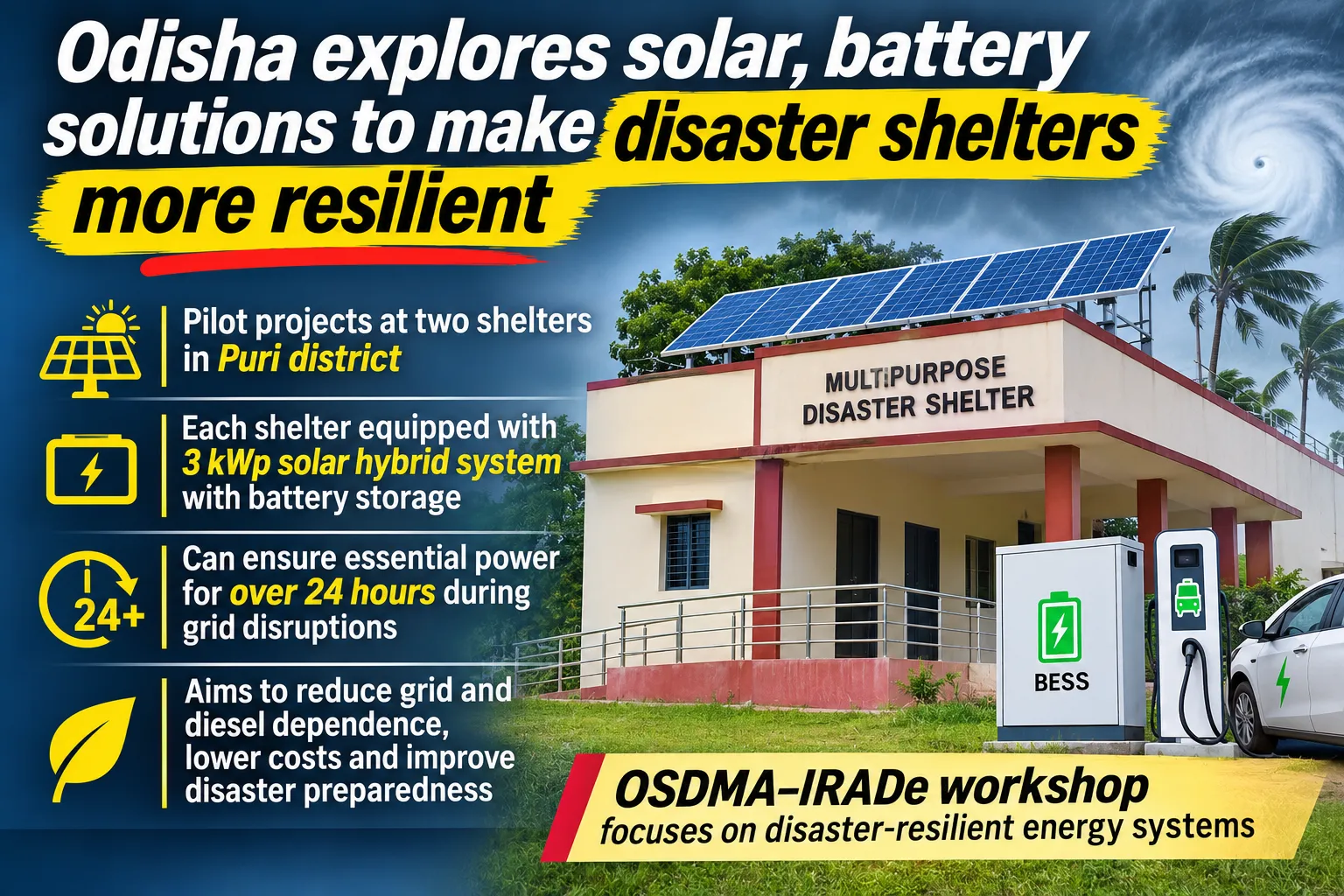
As part of the initiative, IRADe, in coordination with OSDMA, conducted a technical and financial feasibility study of alternative power supply systems based on solar energy and Battery Energy Storage Systems (BESS). Pilot projects have also been implemented at two multipurpose disaster shelters in Puri district.
The shelters at Narasinghpatana in Brahmagiri block and Keutajanga in Astaranga block have each been equipped with a 3 kWp solar hybrid power system integrated with battery storage.
OSDMA, the Puri District Disaster Management Authority and the respective block administrations provided support for implementing the projects.
Presenting the findings of the feasibility study, IRADe Deputy Director Dr Prabal Ghosh said properly designed solar photovoltaic and battery storage systems could reduce dependence on conventional electricity grids and diesel-based backup arrangements.
The study indicated that the systems could meet essential electricity requirements at disaster shelters for more than 24 hours during prolonged grid disruptions. This would depend on factors such as system design, battery capacity, power requirements, and the availability of electric vehicles.
The study also found that the installations could reduce grid electricity consumption and associated costs under normal operating conditions, while improving preparedness for emergencies.
OSDMA Executive Director Sushmita Behera thanked IRADe for its cooperation in implementing the initiative.
OSDMA Adviser Dr Kamal Lochan Mishra described the project as an important step towards integrating clean energy solutions into disaster risk reduction and strengthening critical community infrastructure.
IRADe Director Rohit Magotra stressed the need to combine conventional and modern technologies to improve energy security and disaster resilience at multipurpose shelters.
Representatives from the Energy Department, renewable energy agencies, power distribution companies, village-level disaster shelter management committees, solar equipment developers, battery manufacturers, research institutions and civil society organisations attended the workshop.
.webp)