



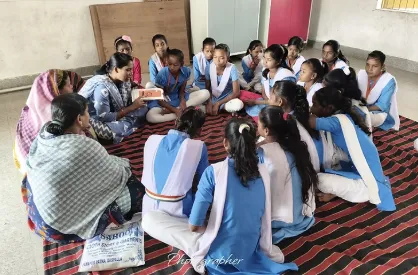
Bhubaneswar, Jun 9: Poor menstrual hygiene facilities and persistent social stigma are emerging as major barriers to girls' education in Odisha, with a recent survey revealing that nearly 74% of schoolgirls miss classes for one to eight days during each menstrual cycle.
The survey, conducted jointly by UNICEF, Aaina, WaterAid, AIIMS Bhubaneswar, and IIT Bhubaneswar, covered 177 institutions, including 121 schools and 56 government establishments across urban and rural areas of the state. The findings highlight significant gaps in menstrual hygiene management, sanitation infrastructure, awareness, and institutional support systems.
According to the report, physical discomfort and pain during menstruation are the primary reasons for school absenteeism among girls. Lack of privacy, inadequate facilities, and deep-rooted social taboos surrounding menstruation further contribute to the problem.
While 94% of schools surveyed have separate toilets for girls, many lack essential menstrual hygiene support such as access to water and soap. The survey found that 56% of schools do not have any facility for the safe disposal of menstrual waste.
The study also highlighted shortcomings in school healthcare services. Only 27% of schools have nurses or healthcare workers, while just 44% are equipped with first-aid kits, limiting support for girls facing menstrual health issues.
In a separate public perception survey involving 800 respondents, participants pointed to the lack of menstrual-friendly toilets in public spaces across both urban and rural areas. The findings underscore the urgent need for improved menstrual hygiene infrastructure and inclusive sanitation facilities.
The report emphasizes that creating accessible, safe, and dignified menstrual hygiene facilities will not only benefit women and schoolgirls but also support persons with disabilities, ensuring greater comfort, hygiene, and dignity for all.