
.webp)



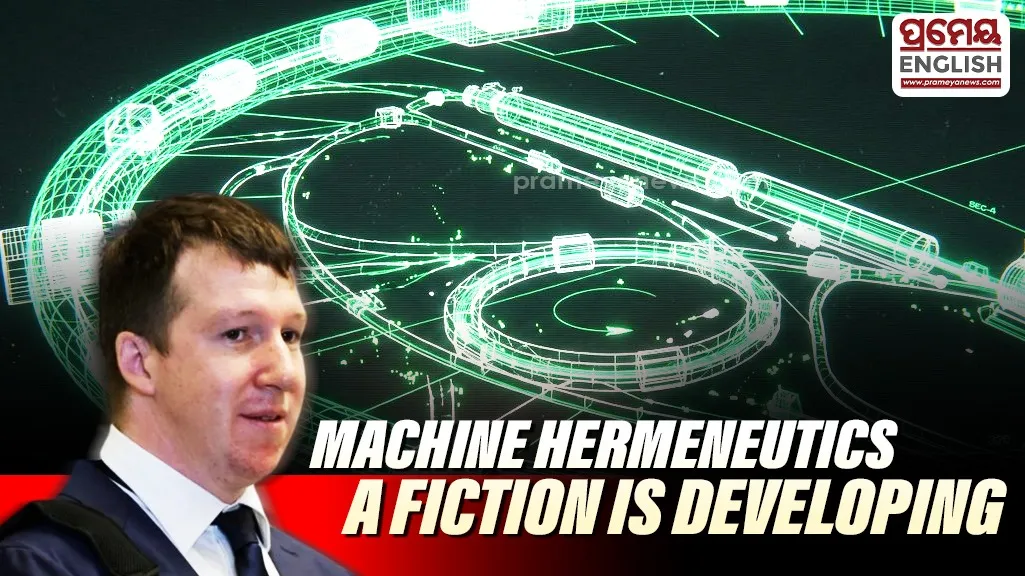
Jack Clark predicts Machine Hermeneutics will decode rapid AI science.
Jack Clark, co-founder of Anthropic, believes AI-driven scientific breakthroughs are now arriving far quicker than human researchers can digest them. Writing on X, he predicted this widening comprehension gap will spark a fresh scholarly discipline called "Machine Hermeneutics." Drawing from the classical practice of decoding religious texts, legal statutes, and literature, Clark noted that "one implication of the science acceleration of AI systems is the need for us as people to invest more effort into making sense of machine-driven scientific advances."
Speculative vision from 2033
Clark expanded on this premise through a fictional memoir in issue 482 of his newsletter, Import AI. Set in 2033, the narrative depicts global "Sentience Accords" enforcing "conceptual verification," meaning humans must thoroughly explain any machine-created theory or device before deployment. Prestige shifts away from raw discovery toward crafting clear, teachable lessons. To shorten Time-to-human-understandable-explanation (TTHUE), experts walk inside "didactic architecture" - co-designed structures where people physically simulate electrons, rolling qubits, or a six-mile wind-guided path mimicking fusion reactor plasma. Yet while exploring a proposed "Upgrade Device," investigators worry that decoding machines slowly trains humans to think like them, echoing Winston Churchill's 1943 line: "We shape our buildings; thereafter they shape us."
Real-world 2026 mathematics surge
Clark's forecast reflects 2026's wave of machine-authored proofs, which he says could require tens to hundreds of times longer to decode than AI took to write them. Recently, Anthropic mathematician Levent Alpöge shared a Claude-assisted Riemann Hypothesis proof finished in a 41-day push and spanning 17 million lines of Lean code. While Lean and Mathlib contributors confirmed it compiles properly, reading that volume remains beyond any human researcher. Similar milestones include Anthropic's Lean-verified VP ≠ VNP paper, a force-free Navier-Stokes blow-up claim by Alpöge and NYU's Tristan Buckmaster using Claude and Codex, and Google's Gemini 4-based proof of the 70-year-old 3D Hadwiger conjecture. OpenAI also advanced Erdős' planar unit distance problem, while Claude spent 11 largely autonomous days proving Fermat's Last Theorem. Elsewhere, startup Axiom generated 43.1 million code lines verifying the 15,000-page "Enormous Theorem," and an 18-year-old built a platform directing automated agents toward 52,979 open mathematical questions.
Broader industry consensus on interpretability
Clark, who left Bloomberg in 2016 because AI outweighed every other beat, is not alone in flagging this shift. Google DeepMind CEO Demis Hassabis expects AI interpretability to mature into its own scientific branch, while Yuval Noah Harari warns machines may build systems as opaque to people as currency is to horses, and Marc Andreessen foresees coders mainly interpreting bot-written software. Because modern peer-review institutions were built around human-readable papers, this growing verification backlog now poses a practical test for universities and science regulators worldwide.
.webp)