


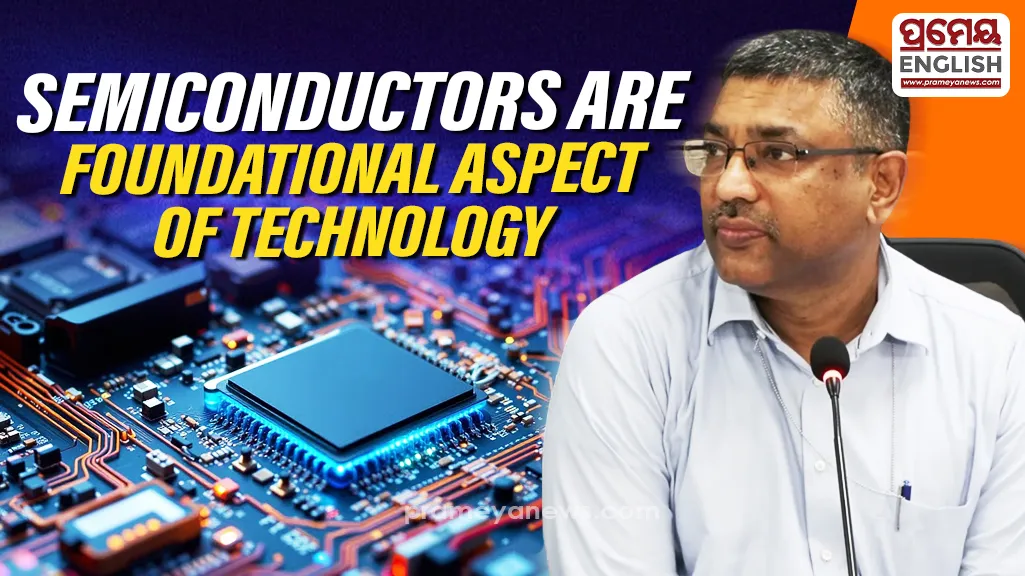
New Delhi, August 18: India's semiconductor ecosystem is set to enter a new phase of expansion, with five to six projects likely to be in commercial production by the end of 2026, while the newly approved ISM 2.0 is set to widen government support across chip design, manufacturing, advanced packaging, equipment, materials, R&D and talent development, MeitY Secretary S Krishnan said on Tuesday while announcing the date of the fifth edition of Semicon India 2026.
The fifth edition of SEMICON India 2026 will be officially inaugurated by Prime Minister Narendra Modi on September 17, 2026, at Yashobhoomi (India International Convention and Expo Centre), New Delhi.
In the press conference, Krishnan said three major semiconductor projects approved under ISM 1.0 have entered commercial production, with more projects likely to be inaugurated by the end of 2026.
"The Prime Minister inaugurated the first of those on February 28, followed by two more, and there is a likelihood that more will be inaugurated before the end of this year," he said, stressing, "We should touch about five or six before the end of this calendar year."
He also added that the commercialisation of these projects would demonstrate the "actual on-ground success" of ISM 1.0 and strengthen India's credibility as a destination for the global semiconductor industry.
Krishnan also highlighted the Union Cabinet's approval of the next phase of the semiconductor programme, ISM 2.0.
Krishnan said the government will support research and development, promote the shift towards more advanced technologies and encourage growth in niche areas such as silicon photonics and power semiconductors.
He also identified talent development as a key priority, noting that while India has a substantial presence in semiconductor design, there is still a need to strengthen the manufacturing workforce.
He said training skilled manpower for semiconductor manufacturing could not only meet India's requirements but also enable the country to provide skilled talent to global markets.
"We have repeatedly made this point that while we have a substantial presence in the design workforce, almost 20 per cent in the manufacturing workforce, there is still work to be done, and once we start training people for manufacturing of semiconductors, then it will be relevant not just for India but for other countries of the world as well..." he said.
Additionally, Semicon India 2026 is expected to draw more than 240 international companies, over 150 globally renowned speakers, delegations from more than 40 countries and six country-specific pavilions, according to Krishnan.
He also highlighted the growing opportunity in India's semiconductor market, saying domestic demand is expected to double to around USD 200 billion from USD 100 billion.
With the government building an expanding pipeline of semiconductor projects, Krishnan said the market would present significant opportunities for global companies and expressed hope that the event would facilitate greater industry partnerships and investment. (ANI)