
.webp)


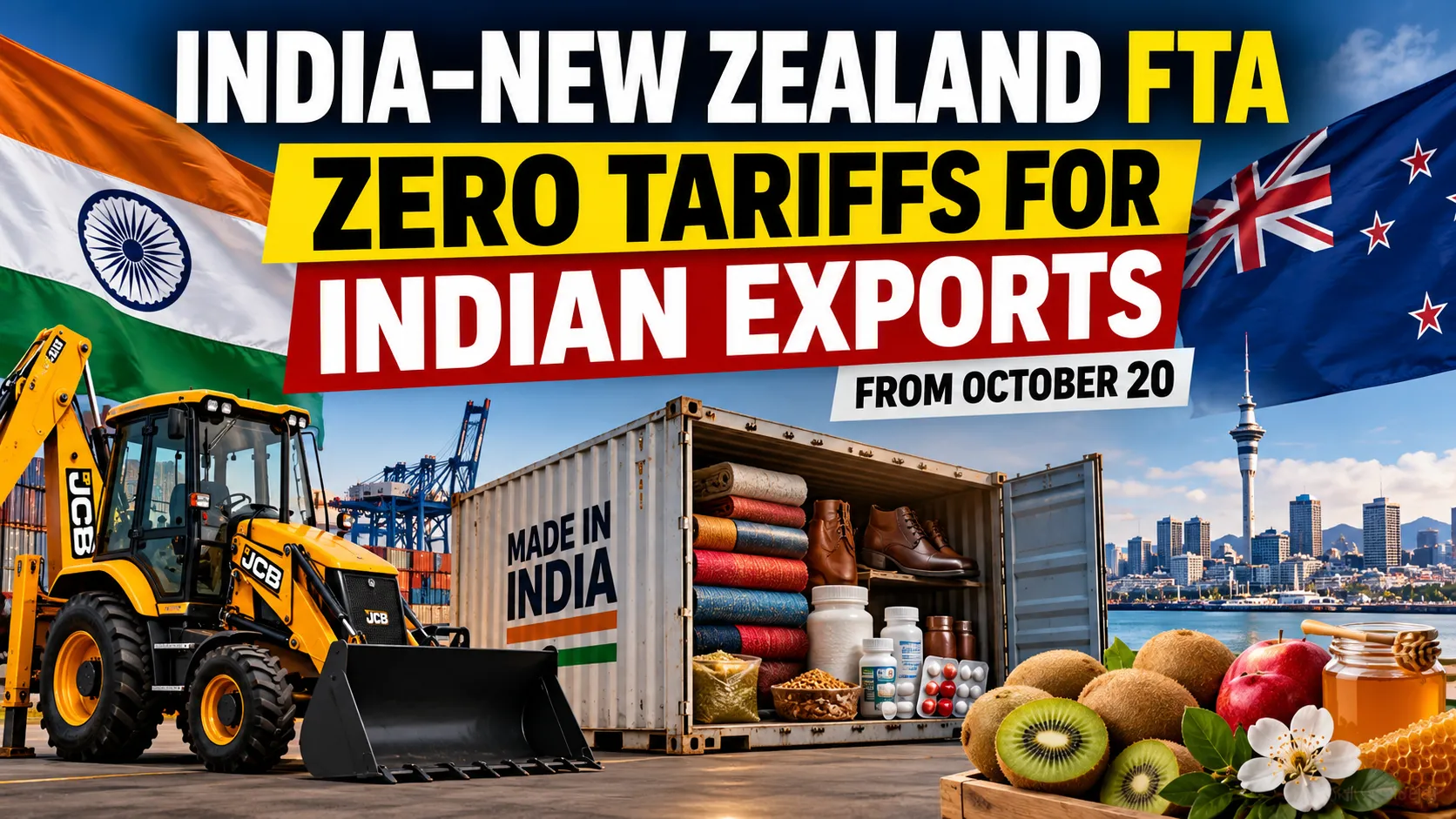
Hyderabad/New Delhi, Oct 19:Indian exporters will gain zero-duty access across all tariff lines in New Zealand from October 20, as the India-New Zealand Free Trade Agreement (FTA) takes effect, removing import duties of up to 10% on key Indian products and opening new opportunities to expand shipments to the market.
The agreement is expected to benefit sectors such as textiles, leather, footwear, pharmaceuticals, chemicals, engineering goods and marine products by reducing costs for importers and making Indian goods more competitive in New Zealand.
Sampath Kumar, Additional Director General of Foreign Trade, said the agreement would eliminate existing duties of up to 10% on textiles, clothing, leather and footwear. Tariffs of up to 5% on pharmaceuticals, agricultural and marine products, plastics, chemicals and electrical goods will also be removed.
The lower duties are expected to help Indian businesses expand their presence in New Zealand, particularly in labour-intensive industries that stand to gain from improved price competitiveness.
Manufacturing exports to gain
The potential benefits of the agreement are already being reflected in India's manufacturing sector. Union Commerce and Industry Minister Piyush Goyal on Monday flagged off the first-ever export of a JCB machine to New Zealand from Pune, Maharashtra.
The development comes as JCB India expects its machinery exports to rise 20% to around 18,000 units in 2026, compared with approximately 15,000 units last year.
JCB India Chief Executive Officer and Managing Director Deepak Shetty said the company exports machinery to 140 countries, with exports accounting for around 25% of its India-made production.
New Zealand offers opportunities for the manufacturer, given demand for machinery in construction, agriculture and material handling.
"New Zealand will now build with a 'Made in India' JCB machine!" Goyal said in a post on X, highlighting the agreement's potential to create new opportunities for Indian manufacturing.
Shetty also expressed optimism about the proposed India-US trade agreement, saying a finalised deal could help the company expand its machinery sales in the American market.
New Zealand eyes Indian consumer market
The FTA is also expected to create opportunities for New Zealand businesses seeking greater access to India's large consumer market.
New Zealand High Commissioner to India Patrick John Rata said the agreement could help exporters increase sales of products such as kiwifruit, apples and Manuka honey in India.
"It will be a significant opportunity for New Zealand in this FTA," Rata said, pointing to the potential for New Zealand businesses to benefit from India's growing economy.
However, India's concessions on these products will be subject to safeguards. The agreement provides calibrated market access for apples, kiwifruit and Manuka honey through tariff-rate quotas, minimum import prices and other measures intended to protect domestic farmers.
The two countries have adopted different approaches to tariff liberalisation. While New Zealand will eliminate tariffs on all Indian goods from the agreement's implementation date, India has offered tariff liberalisation on around 70% of its tariff lines, retaining protections for sensitive sectors, including dairy and certain agricultural products.
According to New Zealand's Ministry of Foreign Affairs and Trade, 57% of New Zealand's exports to India will be eligible for tariff-free entry from October 20, subject to applicable conditions.
Also read: 7 e-commerce platforms under CCPA scanner; 3,940 Sellers and listings delisted
Bilateral trade rises 49%
The agreement comes amid a sharp rise in trade between the two countries. Bilateral merchandise trade reached $1.3 billion in 2024-25, registering a 49% increase over the previous financial year, according to India's Ministry of Commerce and Industry. India's merchandise exports to New Zealand stood at $711 million during the period.
Signed on April 27, 2026, in New Delhi by Goyal and New Zealand's Minister for Trade and Investment Todd McClay, the agreement aims to strengthen trade and investment ties between the two countries. (With ANI inputs)
.webp)