

ଓଡ଼ିଆ | ENGLISH
ଓଡ଼ିଆ | ENGLISH

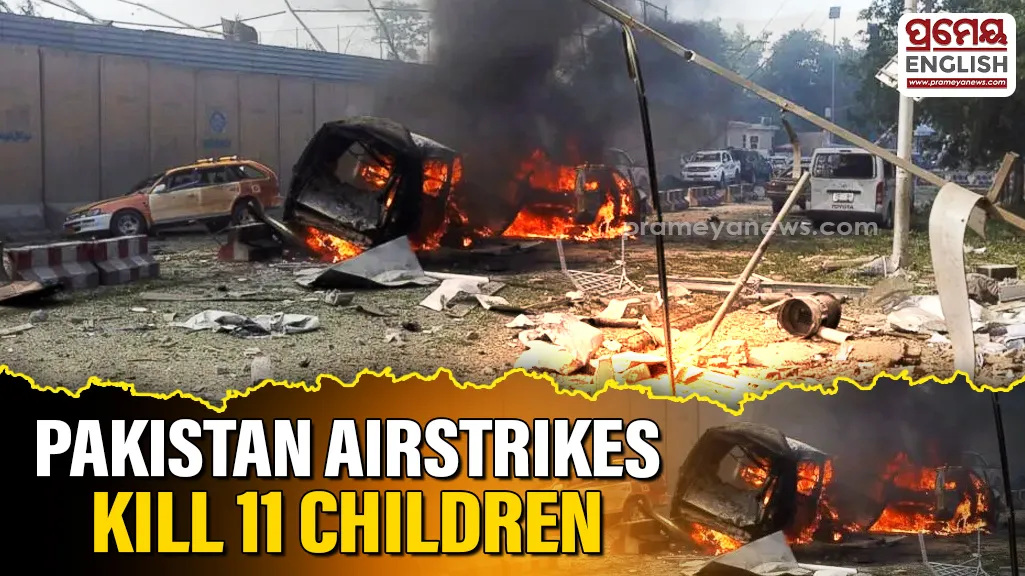
Pakistan airstrikes Afghanistan kill 11 children after cross-border security truce collapses

Overnight cross-border military raids by Pakistan have resulted in the deaths of 13 civilians, predominantly children, inside Afghan territory. The unexpected bombardment effectively ends a recently brokered ceasefire, driving hostilities between Kabul and Islamabad to dangerous new levels
Published By : Satya Mohapatra | June 10, 2026 12:24 PM
Pakistan airstrikes Afghanistan kill 11 children after cross-border security truce collapses

Lethal cross-border military strikes dismantle fragile South Asian truce

Pakistani air force jets crossed into Afghan airspace overnight, dropping munitions on residential properties in eastern and southeastern border provinces and leaving 13 civilians dead. Taliban government spokesperson Zabihullah Mujahid confirmed that the victims of the midnight raid included 11 children, one woman, and an elderly villager. Another 14 individuals suffered severe injuries as structures collapsed in the targeted border regions.

Broken Truce in Volatile Border Belts

Military personnel in Islamabad initiated the assault across Khost, Kunar, and Paktika provinces. Security planners in Pakistan maintain that these actions strictly targeted operational bases belonging to the Tehrik-e-Taliban Pakistan (TTP). This heavy bombardment directly follows a fatal TTP ambush on a paramilitary checkpoint in Khyber Pakhtunkhwa that killed six Pakistani security officers just a day prior.

Historically, relations between Kabul and Islamabad have deteriorated rapidly since the Taliban returned to power in 2021, transforming former regional allies into direct military adversaries along the Durand Line. This latest offensive shatters a delicate ceasefire brokered by international mediators just months ago.

High Risk of Regional Escalation

Angered by the destruction of civilian properties, Afghan authorities labeled the cross-border operation an unforgivable offense against sovereign territory. Taliban leaders issued warnings of a structured military retaliation if airspace violations persist. Meanwhile, representatives from the United Nations expressed intense concern regarding the fast-expanding conflict, noting that open warfare between these heavily armed neighbors threatens broader economic and refugee stability across South Asia.