

.webp)


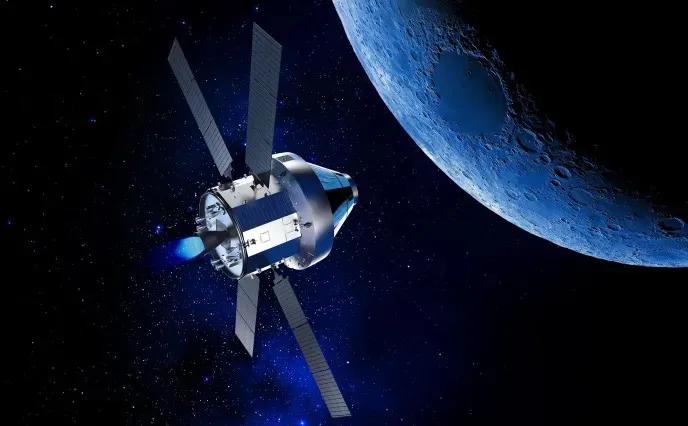
NASA's Orion spacecraft successfully moves into lunar trajectory
NASA’s Artemis II crew successfully exited Earth’s orbit this Friday, signaling a monumental shift in human spaceflight as the Orion spacecraft accelerates toward the Moon. This milestone marks the first time a crewed vehicle has ventured toward lunar territory since the conclusion of the Apollo era in 1972. Orion’s main engine ignited for exactly five minutes and 49 seconds during a high-stakes translunar injection maneuver. This operation produced roughly 6,000 pounds of thrust, providing the velocity required to escape planetary gravity. NASA officials confirmed the spacecraft is now on a precise flight path for its scheduled lunar flyby.
Mission Dynamics and Crew Life
Astronauts Reid Wiseman, Victor Glover, Christina Koch, and Jeremy Hansen began their initial full day in microgravity with rigorous physical exercise and system checks. Mission control in Houston initiated the day's operations by playing "Green Light," a symbolic nod to the "Go" status for their deep-space transit. This mission serves as a critical bridge for the Artemis program, which aims to establish a permanent presence on the lunar surface, a goal that parallels India’s own lunar ambitions following the success of Chandrayaan-3.
Future Objectives
Testing life-support systems in the harsh environment of deep space remains the primary focus of this 10-day journey. Following the lunar loop, the capsule will return for a high-speed reentry and splashdown in the Pacific Ocean. Successful completion of this flight validates the Space Launch System (SLS) and Orion hardware for upcoming landing missions.
With Agency Inputs
.webp)