



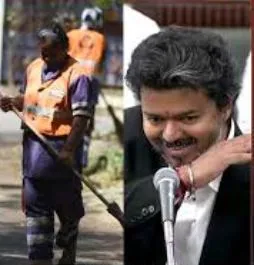
Chennai, June 28: Amid criticism that it was paving the way for further privatisation of municipal solid waste management, the Tamil Nadu government has withdrawn tenders floated to appoint consultancy firms for preparing Detailed Feasibility Reports (DFRs) under the Public-Private Partnership (PPP) model across 12 municipal corporations.
The tenders, issued by the Tamil Nadu Urban Infrastructure Financial Services Limited (TNUIFSL), were cancelled within days after the proposal drew sharp criticism from political parties and sanitation workers' unions, who viewed it as a fresh attempt to privatise waste collection and transportation services.
A senior government official clarified that municipal solid waste management in all corporations and municipalities has already been operating under the PPP model since 2022. The proposed consultancy, the official said, was intended solely to assess the existing system and recommend measures to improve its efficiency.
"The consultancy was meant to prepare feasibility reports and examine ways to strengthen the current waste management framework. However, as the tender was widely misunderstood as a new privatisation initiative, the government has decided to withdraw it and undertake a fresh review of the entire framework," the official said.
According to sources, the Urban Development Department will now comprehensively assess the existing solid waste management system, identify operational shortcomings and contractual gaps, and determine the future course of action based on its findings.
On June 20, TNUIFSL had invited bids from consultancy firms to prepare DFRs and provide transaction advisory services for municipal solid waste management in Avadi, Hosur, Tambaram, Vellore, Coimbatore, Erode, Salem, Tiruppur, Madurai, Thoothukudi, Tiruchy and Tirunelveli.
The consultancy project, estimated at ₹4.05 crore, was divided into three packages and was to be financed through the Project Development Grant Fund.
Officials had maintained that the exercise was aimed at enhancing the efficiency of the existing waste management system by addressing deficiencies in current contracts and identifying improved operational models. Nevertheless, the proposal sparked opposition, with critics arguing that it signalled an expansion of private participation in municipal sanitation services.
Welcoming the government's decision to withdraw the tenders, the CPI(M) and CPI described the move as a positive development.
CPI(M) state secretary P. Shanmugam said sanitation workers, who were once employed as permanent staff, had increasingly been pushed into temporary and contract-based employment, leading to job insecurity and exploitation. He urged the government to strengthen the public waste management system while ensuring the protection of sanitation workers' rights and livelihoods.