
.webp)

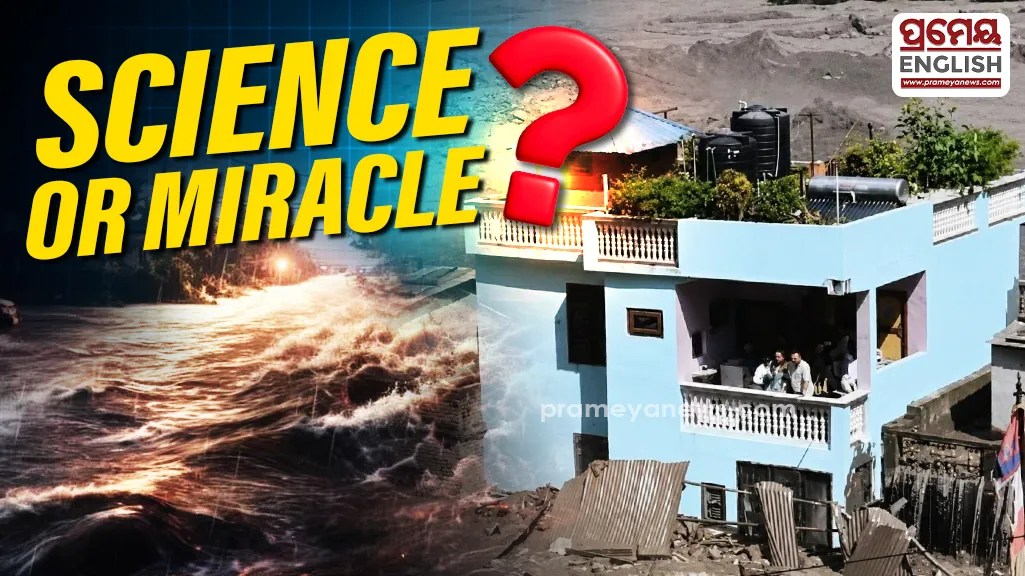
Kathmandu, Sept 1: A mint-green, two-storey house has emerged as a striking symbol of resilience amid the devastating flash floods that tore through parts of Nepal. While torrents of muddy water, boulders, uprooted trees and debris destroyed structures around it, the house remained standing almost completely intact.
Videos circulating online show three people anxiously watching the disaster from the home's balcony as floodwaters surge around the building. Although water entered the ground floor and ripped away doors and windows, the main structure remained firmly in place.
But the house's survival may not simply be a matter of luck.
According to a technical analysis shared by the X account Architecture Presentation, the building's reinforced-concrete frame may have played a crucial role in protecting it from the powerful lateral forces generated by the flood.
Many houses in Nepal's Himalayan valleys are reportedly built using stone masonry without reinforced-concrete structural frames. Such buildings can withstand vertical loads relatively well but are more vulnerable to powerful sideways forces caused by fast-moving water and debris.
The mint-green house, however, reportedly had a reinforced-concrete frame with steel reinforcement connecting its columns, beams and foundation into a rigid structural system. This allowed the building to distribute the force of the debris flow through the frame and transfer it down to the foundation rather than allowing individual walls to absorb the entire impact.
Another factor may have been the house's location. The analysis suggested that it stood away from the main flood channel and therefore avoided the most powerful section of the current.
As mud, debris and broken structures accumulated around the house, they may also have helped redirect subsequent waves of floodwater away from the building.
The remarkable footage has therefore drawn attention not only to the devastating power of the floods but also to the importance of structural engineering and site selection in areas vulnerable to extreme natural disasters.
.webp)