
.webp)


Bhubaneswar, Oct 9: Amazon and Flipkart are rolling out aggressive smartphone discounts during their annual festive sales, offering deals across price segments even as the artificial intelligence (AI) boom drives up memory-chip costs and threatens to make budget and mid-range handsets increasingly expensive.
Amazon’s Great Indian Festival and Flipkart’s Big Billion Days are offering price cuts, bank discounts, exchange benefits and no-cost EMI options. However, the promotional push comes amid growing concerns that rising demand for memory chips from AI data centres is tightening supplies for consumer electronics, putting pressure on manufacturers and buyers.
Premium, mid-range phones feature in festive deals
On Amazon, the Samsung Galaxy S25 Ultra 5G is available for Rs 94,999, including a Rs 10,000 coupon offer, against its launch price of Rs 1,29,999. The iQOO 15R is priced at Rs 53,999 after a Rs 7,500 coupon discount, while the OnePlus Nord 6 is available for Rs 42,999, including a Rs 2,000 credit-card EMI discount.
In the mid-range segment, covering handsets priced between Rs 20,000 and Rs 50,000, Amazon is offering the OnePlus Nord CE6 at Rs 31,999, including a Rs 3,000 SBI credit-card EMI discount, and the Samsung Galaxy A56 5G at Rs 35,999.
For budget-conscious buyers looking for smartphones priced below Rs 20,000, the platform lists the iQOO Z11 Lite 5G at Rs 17,497, including a Rs 2,000 coupon offer, and the Redmi 15C 5G Prime Edition at Rs 17,999. The Lava Bold N4 Pro 5G is available for Rs 14,999, including a Rs 1,000 SBI credit-card discount.
Amazon is offering a 10% instant discount on eligible SBI credit and debit card transactions, including credit-card EMI purchases. Customers using the Amazon Pay ICICI Bank credit card can also earn unlimited cashback of 5% as Prime members and 3% as non-Prime members, subject to applicable terms and conditions.
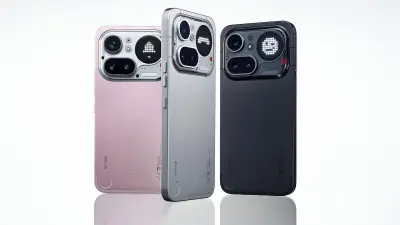
Flipkart is targeting similar price segments through its Big Billion Days sale. The Apple iPhone 17 has an advertised effective price of Rs 86,999 for eligible buyers, while the Samsung Galaxy S25 5G is listed from Rs 55,299. In the mid-range category, the Motorola Edge 70 Fusion starts at Rs 31,349 and the Nothing Phone (4b) at Rs 24,999. Budget options include the Mivi One 5G from Rs 14,249 and the Hot 60i 5G+ from Rs 15,999.
Flipkart is offering instant discounts of up to 10% on eligible Axis Bank and ICICI Bank card transactions. Additional offers may apply to selected products and transactions, subject to individual offer limits and conditions. The iPhone 17’s effective price may also depend on eligible card benefits and exchange bonuses, meaning buyers who do not qualify for these offers could pay more.
AI boom tightens memory-chip supply
The aggressive promotions come as the global semiconductor market grapples with a supply squeeze driven by surging demand from AI data centres. Technology companies are investing heavily in infrastructure to train and run AI models, requiring large quantities of high-bandwidth memory (HBM), a specialised form of dynamic random-access memory (DRAM) that enables AI processors to access data rapidly.
As chipmakers prioritise these high-value components, production capacity and investment are increasingly being directed towards AI-related requirements. This is contributing to tighter supplies and higher costs for conventional DRAM and NAND flash memory used in smartphones, laptops and other consumer electronics.
Memory chips are essential for running applications, multitasking and storing data, making them difficult to eliminate from a smartphone's bill of materials. Manufacturers must therefore either absorb higher costs, raise retail prices or adjust hardware specifications to preserve profitability.
Why manufacturers and retailers may favour premium phones
The squeeze is also reshaping manufacturers' product strategies, with some shifting their focus towards premium smartphones. Higher-priced devices generally offer greater scope to absorb rising component costs and generate more revenue per unit, while entry-level handsets operate on thinner margins.
Prioritising premium models can therefore help manufacturers protect profitability when memory supplies are constrained and prices are volatile. Industry reports indicate that some companies are cutting production of lower-priced devices and allocating more resources towards higher-value models.
The same economics can influence retail sales strategies. Dealers may have greater incentives to promote expensive smartphones because they generate higher transaction values and can provide more scope for financing offers, exchange schemes and promotional bundles. However, the extent to which individual retailers prioritise premium devices depends on inventory, commercial agreements and consumer demand; the chip shortage alone does not establish that every dealer is pushing high-end phones.
Higher prices threaten affordability

The broader market outlook reflects this tension. Counterpoint Research expects smartphone sales volumes in India during the 2026 festive period to decline by around 12% year-on-year, even as market value rises by 5%, partly reflecting higher average selling prices.
This suggests that consumers may purchase fewer devices even as the money spent on smartphones increases. The impact could be particularly pronounced in the budget and mid-range segments, where affordability often determines purchasing decisions.
Higher memory costs can make low-cost models less viable for manufacturers, encourage price increases or lead to compromises in specifications. Consumers may consequently have to spend more to obtain a device with comparable memory and storage, or postpone an upgrade altogether.
Festive discounts can offer temporary relief, but effective savings depend on card eligibility, exchange values and other conditions. As the AI boom continues to reshape the semiconductor market, the festive sales will test whether e-commerce discounts can sustain demand or whether rising component costs will put affordable smartphones increasingly out of reach for Indian consumers.
.webp)