

Millions gather yearly for twelve sacred chariot festival days
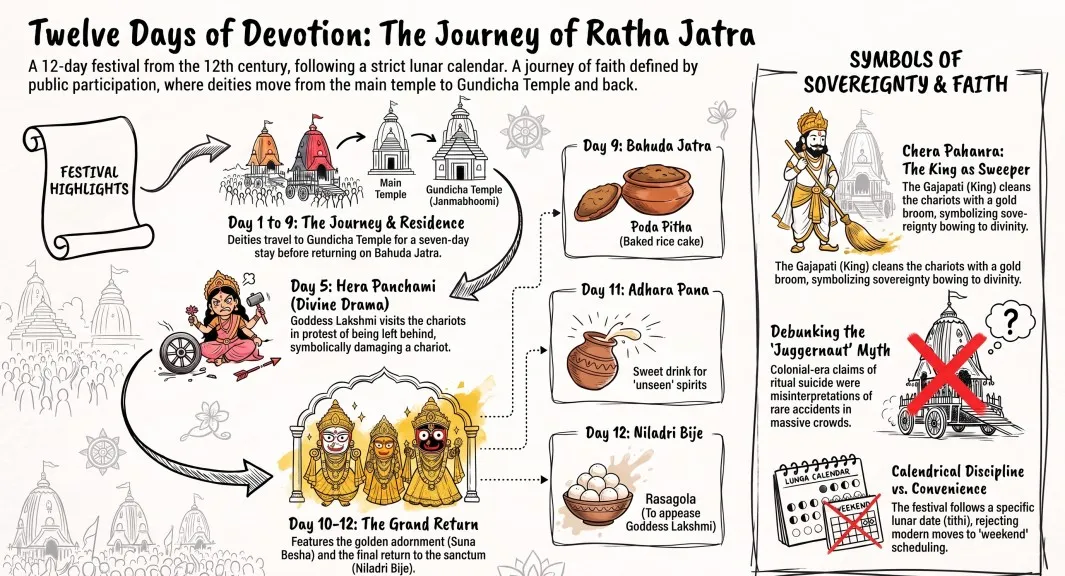
Every year, millions of pilgrims flock to Odisha for the grand Puri Ratha Jatra. This twelve-day chariot festival follows a strict lunar schedule. It begins on the second day of the bright fortnight in the Odia month of Ashadha. Unlike modern events, this traditional timeline ignores convenient weekends. The chariots roll exactly when the ancient temple almanac dictates.
Deep Cultural Roots
Ancient historical records trace this grand tradition back centuries. King Anantavarman Chodaganga Deva built the shrine in the twelfth century. Following this achievement, King Anangabhima III formalised the chariot procession rituals. This specific period established a solid cultural foundation for the entire coastal belt of Odisha. Today, that enduring legacy survives through deeply rooted community participation and unwavering religious belief.
Recent years have brought scheduling controversies. Some international devotional groups now organise similar chariot events on favorable weekends. Odia scholars strongly oppose this modern shift. They argue that severing the festival from its authentic lunar date breaks strict theological rules. These local experts view the specific timing as an essential spiritual requirement rather than a flexible civic holiday.
Sacred Twelve Days
Festivities consistently begin with the outward chariot pull to Gundicha shrine. After a seven-day stay, the deities return during Bahuda Jatra. Subsequent days feature Suna Besha, Adharapana, and finally Niladri Bije. These beautifully orchestrated events blend deep devotion with intricate temple rules, demanding intense physical participation from the gathered crowds.
Many people confuse different shrines along the route. Gundicha shrine acts as the symbolic birthplace. The deities reside here for a full week. In contrast, Mausima shrine sits directly on the main road. Dedicated to Goddess Ardhasini, this small temple hosts the deities for only a few hours during their return trip.
Connecting With Devotees
During that brief halt, priests offer a special baked treat. They serve poda pitha to the deities. This simple cake of rice, coconut, and jaggery represents ordinary Odia household cooking. By accepting this rustic food, the lord of the universe connects directly and intimately with everyday people, completely breaking down formal religious barriers.
Another custom happens before the chariots move. The current Gajapati of Puri sweeps the chariot platforms with a golden broom. Known as Chera Pahanra, this act of humility originated with King Purushottama Deva in the fifteenth century. Legend says he defeated the Kanchi kingdom with divine help. Today, the royal sweeping shows that earthly power bows to divine authority.
Correcting Historical Misunderstandings
Historically, foreign colonial observers misunderstood these intense devotional acts. British writers coined the word juggernaut based on these chariots. They falsely claimed that devotees routinely threw themselves under the heavy wooden wheels. Modern historians reject these dark myths entirely. Any historical deaths resulted from tragic crowd crushes, not any organized form of ritual suicide. Genuine spiritual teachings actively discourage self-harm.
Unmatched visual splendor finally peaks on the tenth day of the procession. Priests decorate the three deities with spectacular gold jewelry right on their chariots. This event draws enormous crowds to the temple gates. The next day, priests offer tall pots of sweet milk drink. Interestingly, they break these pots to feed unseen guarding spirits instead of distributing the drink to human devotees.
Divine Marital Drama
Goddess Lakshmi angrily blocks the main temple doors on the twelfth day. She feels slighted because her husband left her behind. Temple servants act out this divine argument using ancient verses. Finally, the lord offers a sweet rasagola to appease her. The doors open, and the deities re-enter the main sanctum. This ritual even strengthened Odisha's successful bid for the rasagola geographical indication tag in 2019.
Faith ultimately drives this entire magnificent spectacle. Precise calendrical rules govern the priests, but raw devotion brings the enthusiastic crowds. People gather on the Grand Road seeking pure divine connection. They gladly come out to pull the heavy wooden ropes, see the gorgeous golden attire, and proudly witness ancient religious faith come alive in the streets.