
.webp)



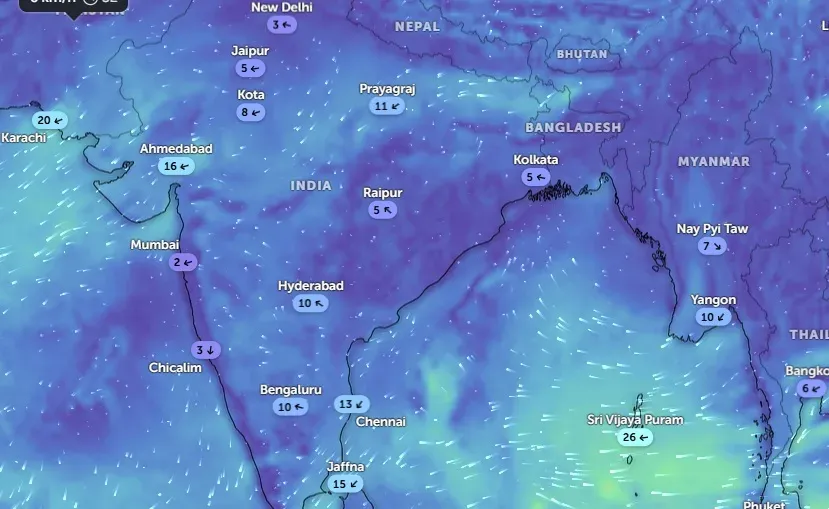
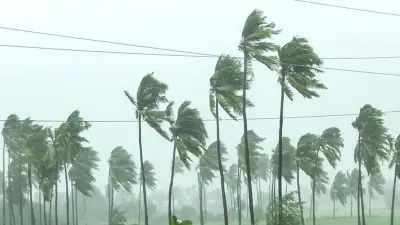
Bhubaneswar, Nov 22: A fresh low-pressure system is likely to develop over the southeast Bay of Bengal and adjoining Andaman Sea around November 30, raising concerns over possible cyclonic activity in the region. The development comes after three consecutive cyclones moved towards the Andhra Pradesh–Odisha coast in recent days.
According to the extended-range forecast of the India Meteorological Department (IMD), a cyclonic circulation is likely to form over the region. However, the weather agency has not yet issued any prediction regarding its intensity, movement or potential impact.
While some weather models suggest that the system may move towards Sri Lanka, another model indicates that it could intensify further. However, meteorologists believe it is too early to draw any definite conclusions about its future course or development.
IMD Director General Dr Mrutyunjay Mohapatra said that tropical cyclones generally occur during two major seasons in India — the pre-monsoon period from April to June and the post-monsoon period from October to December. Both the Arabian Sea and the Bay of Bengal witness cyclonic activity during these periods.
On average, five to six cyclones develop over the two seas every year. Of these, one to two generally occur during April–June, while three to four develop between October and December. However, this is only an average pattern and does not mean that the same number of cyclones will occur every year.
Interestingly, no pre-monsoon cyclone was recorded this year. However, the Bay of Bengal has witnessed three successive cyclones — Arnab, Murasu and Akhvan — within a short span of time. All three systems reportedly moved towards the Andhra Pradesh–Odisha coastline.
Also read: Odisha’s 'Zero-Casualty Record' after Cyclone Akvan a major success: Minister Suresh Pujari
A similar situation was last witnessed in 1987, when a series of cyclonic systems developed under strong El Niño conditions. Notably, the current year has also witnessed a strong El Niño phase, drawing comparisons with the weather pattern observed in 1987.
Meanwhile, the IMD has forecast largely dry weather across Odisha until December 1. Night temperatures are expected to remain almost unchanged over the next three days. Thereafter, minimum temperatures may drop by 2–3 degrees Celsius over the following four days.
The IMD is expected to monitor the developing weather system closely, with further clarity on its intensity, direction and possible impact likely to emerge as the forecast period approaches.
.webp)