


Bhubaneswar, June 25: The history of fossil collecting in Alberta goes back to the late 1800s, when the first dinosaur remains were found in Canada.
In 1884, a 26-year-old geologist with the Geological Survey of Canada found the skull of a meat-eating dinosaur a few kilometers from Drumheller. His name was Joseph Burr Tyrrell.
The nature-enthusiast Joseph’s curious venture in the long run gave birth to a world-famous natural history museum at the Badlands of Alberta in Canada. His studies on the extinct species of animal opened up a new dimension in the field of study of nature with reference to the environmental crises and evolutions.
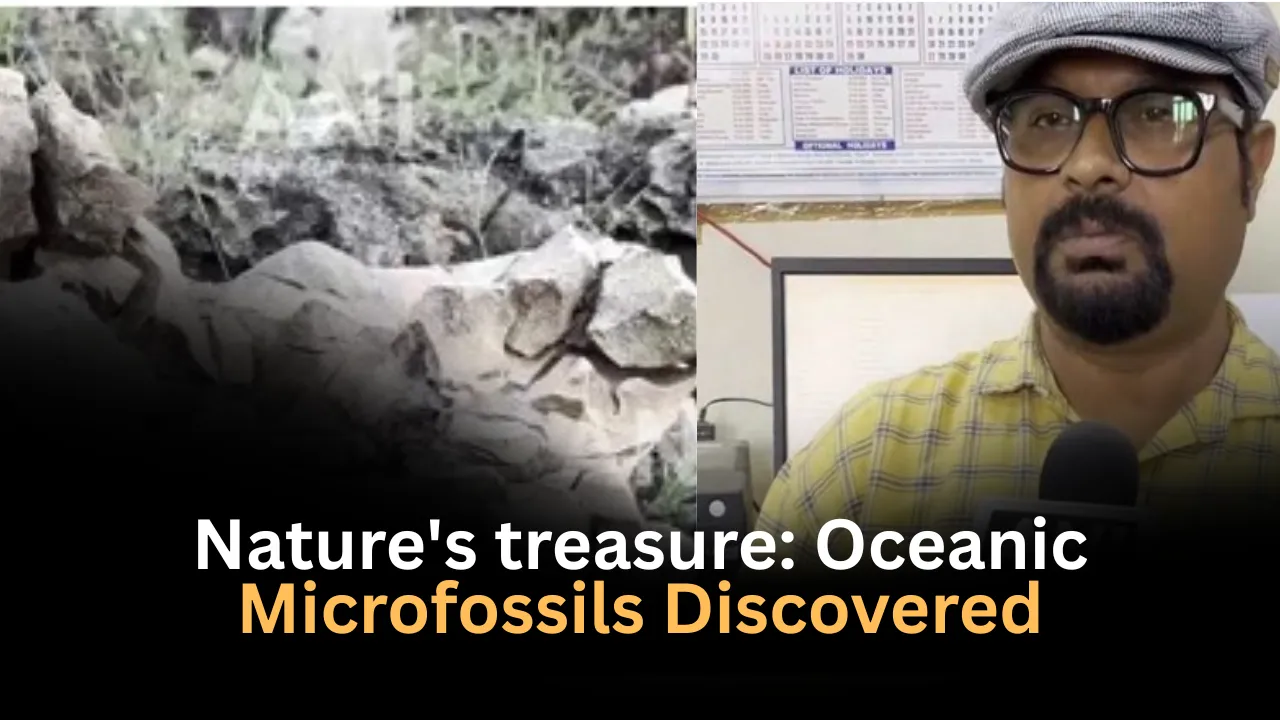
A short while ago, Dr. Debabrata Nandi (Researcher/ Professor in The Department of (Geographic Information System (GIS) at the Maharaja Sriram Chandra Bhanjdeo University (MSCBU) in Odisha’s Mayurbhanj district has discovered ancient fossils estimated to be dating back from 15- million-years.
Dr. Nandi, an Assistant Professor who specialises in Remote Sensing at Maharaja Sriram Chandra Bhanjdeo University, has discovered the fossil bed containing microfossils, shark teeth, shark vertebrae, and unidentified fossils.
Collaborating with various paleontology institutes, he aims to further identify these fossils, which are estimated to be from the Messinian period, approximately 15 million years ago.
Located in the Mayurbhanj district in Odisha, this site suggests a former marine belt, despite now being 60 kilometers from the sea, raising questions about climate change or natural disasters.
Dr. Nandi proposes that this site could be developed into a fossil park or geo-heritage site to attract tourism and facilitate research, though formal government recognition awaits further study and publication.
Following Dr. Nandi’s revelation, the site has pulled crowds of students, visitors, nature lovers, geo-researchers and geologists, who are found collecting panoramic shots of the views and collects lucrative samples from the ground.
The recent findings of too ancient historic fossils, microfossils and millions-year-old disintegrated oceanic-remnants in Odisha’s hilly terrain Mayurbhanj, has brought an abundant scope for the researchers and scholars to have an intensive study on the resourceful geostatic location.
Apart from further studies, the site needs to be preserved and developed as a hub of Natural history & planetology like Badlands of Alberta in Canada.
If the NASA's Earth Science Division (ESD) takes up the study and institutions like Bristol University that excel in the field of Natural history & planetology come ahead to have a glance on the site, Odisha’s Mayurbhanj could have a newer geo-tropical recognition on the world map, alongside its lush green environment and indigenous tribal diversities.